
The answer to that question is “Maybe.” Bodies are symmetrical, and when one side is used more than the other, all kinds of issues can crop up. You’ve heard of ergonomics, probably in conjunction with having the right office chair and monitor height. Well, your body also needs proper ergonomics, positioning, and balance in all activities to keep musculoskeletal disorders at bay.

In 2006, our patient Wendi seriously injured her left arm while snow skiing. She recovered from the accident only to discover that she had minimal use of her arm and chronic pain. After twelve years of unsuccessful surgeries and elbow replacements, Wendi chose to have her arm amputated. She also waited awhile before she looked into the possibility of getting a prosthesis. Working at Trader Joe’s, she got used to having half an arm, but she felt held back by it:

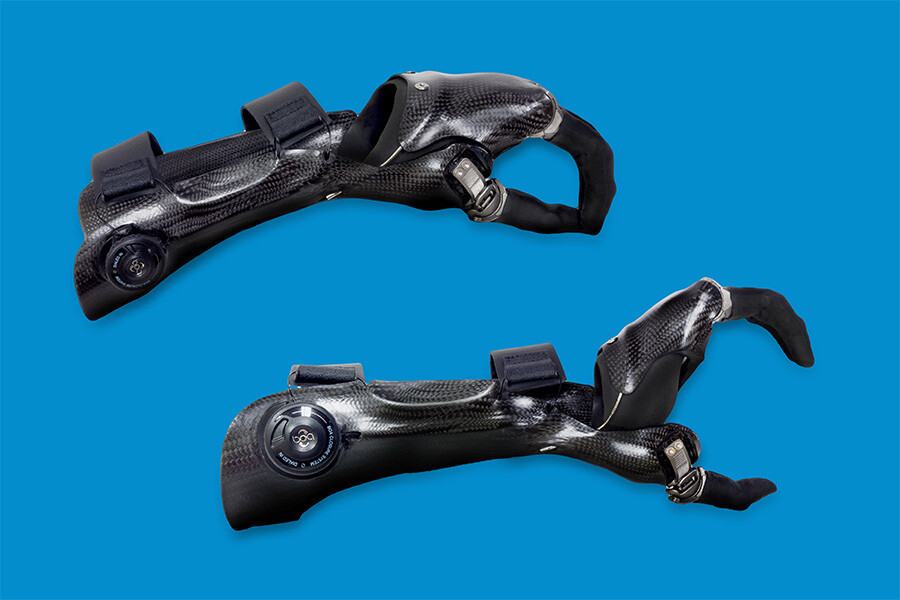
Notice how Wendi’s prosthesis is shorter than her sound arm? Since she was used to working with a shortened left arm, she wanted to keep it that length but allow herself to gain more function with a terminal device. She was initially worried that a prosthetic provider wouldn’t listen to her thoughts about what would work best for her  that’s part of why she delayed exploring prosthetic options. It’s also one of the things that makes Arm Dynamics centers different: while we may be prosthetic experts, the only expert when it comes to your body is you. Wendi thought that a shortened prosthesis would work best for her situation, and we supported her in that decision.

Sometimes pain-free function can be born from curiosity. Our patient Karen, who was born with an upper limb difference, used a prosthesis when she was a child (not provided by us), but didn’t find it helpful enough to continue with. Later, her then-boyfriend, now-husband, showed her a webpage featuring a multi-articulating myoelectric hand. After a long journey and a lot of insurance ins and outs, Karen obtained an i-Limb Quantum hand and a wrist rotator for her prosthesis. She incorporated it into her daily activities and found that she experienced less pain in different areas of her body when she used it. “I have always been able to figure out how to get things done without my prosthesis. But the continued wear and tear on the body from years of not using one was getting to be a problem. Once I had a device and was using my body more symmetrically, my back pain significantly diminished. My wrist pain significantly diminished. I stopped waking up in the morning with numb fingers. It’s not about being unable to do things and then, all of a sudden, being able to do them — it’s doing stuff better.” While the prosthesis that Karen used twenty years ago was less than helpful, upper limb prosthetic options and functionality have advanced significantly.

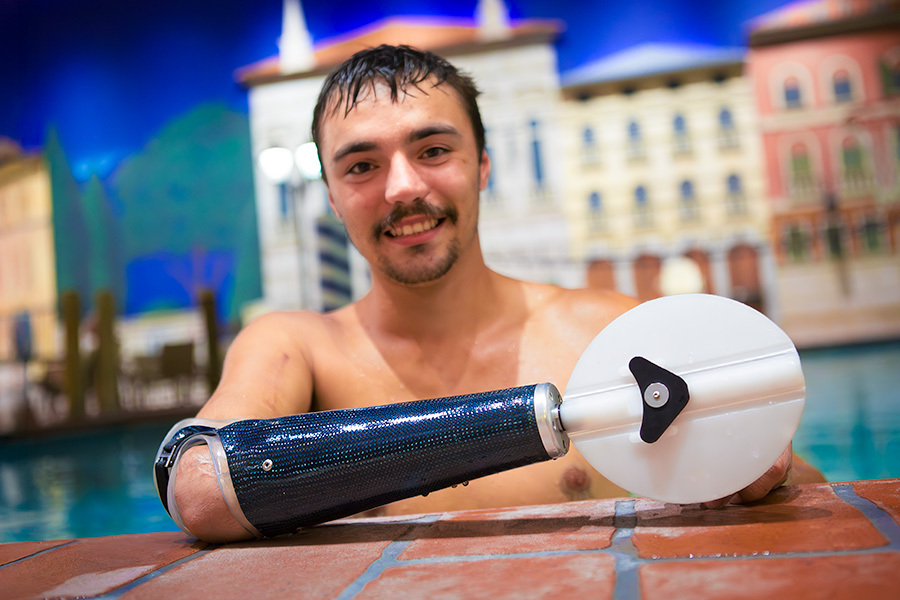
When our patient Autumn, pictured below, was born without a left hand, her parents wanted to know, as her mom Sarah said, “What tools she could have in her toolbox.” When our team interviewed Autumn in 2023 at the age of eight, she was using a single-motor myoelectric hand and an activity-specific prosthesis with two attachments, a “shroom tumbler” and a “swinger.” Sarah, again: “We’ve learned the importance of prosthetics for specifically upper arm is so that Autumn doesn’t overuse the muscles in her shoulder  we want her to continue to be healthy and have balanced muscle control.”

Autumn-Listing (1)

But clearly, as Wendi and Karen shared above, you can start easing the strain of overuse symptoms at any time with the use of an upper limb prostheses. We receive emails from potential patients fairly frequently who say that the reason they want to start their prosthetic journey is because of the pain they are experiencing in their sound hand, shoulder, back or elsewhere.

It's not just about getting an upper limb prosthesis it’s about getting an upper limb prosthesis that fits well, functions as expected and is pleasing to your eye, because then it’s more likely that you will use it consistently. It’s also about learning how to use it in a way that is going to reduce those overuse symptoms. In our patient progress videos, which we use to demonstrate the functional improvement of patients, our clinical therapy specialists ask patients to do several activities, first without a prosthesis and then using a prosthesis. In these videos, we often hear the therapists saying things like, “Look how your elbow is down now I’ll bet that feels better,” or “Your shoulders aren’t hunched anymore.” When our patients talk about trying to do standard two-handed tasks with one hand, there’s a lot of use of the words “awkward” or “painful.” With their prosthetic device on, the most used words are “much better” “pretty cool” and "amazing"  like in the video below. An upper limb prosthesis can bring symmetry to the whole body and preserve other parts of your body, even your teeth. Because opening a bag of chips using your mouth is not something your dentist wants you to do!

For our prosthetists and clinical therapy specialists, it’s all about what helps our patients achieve their goals. Some of our patients start with an activity-specific prosthesis, and that’s fine. Maybe they’ll decide they need another prosthesis later, and that’s also fine. We’re here to listen, to provide unique prosthetic solutions, and to ensure a holistic approach to our patients’ care.

If that’s the type of prosthetic care you’re interested in, for yourself or for someone you know, please contact us. If you would like to leave a comment on this article, please do so below.

Subscribe!

No Comments Yet

Let us know what you think