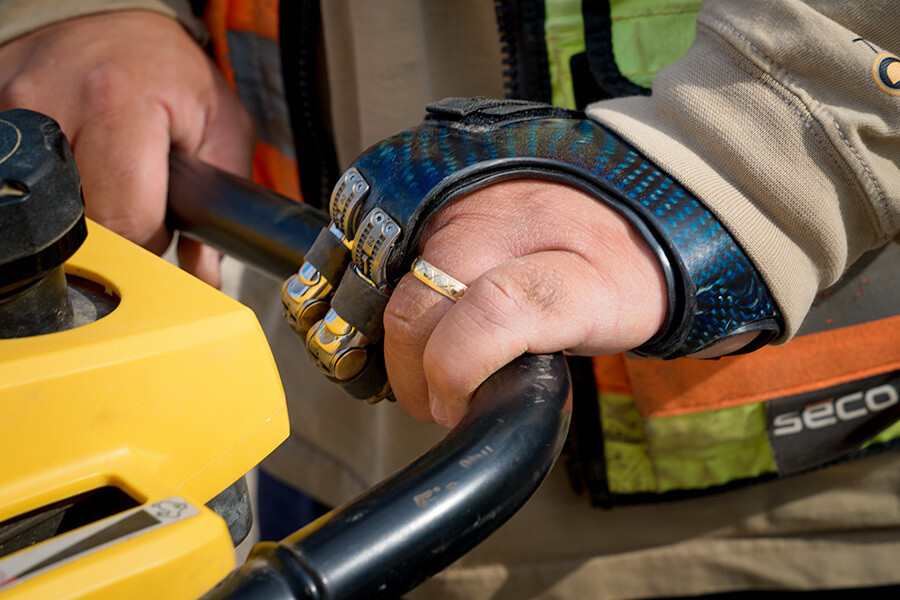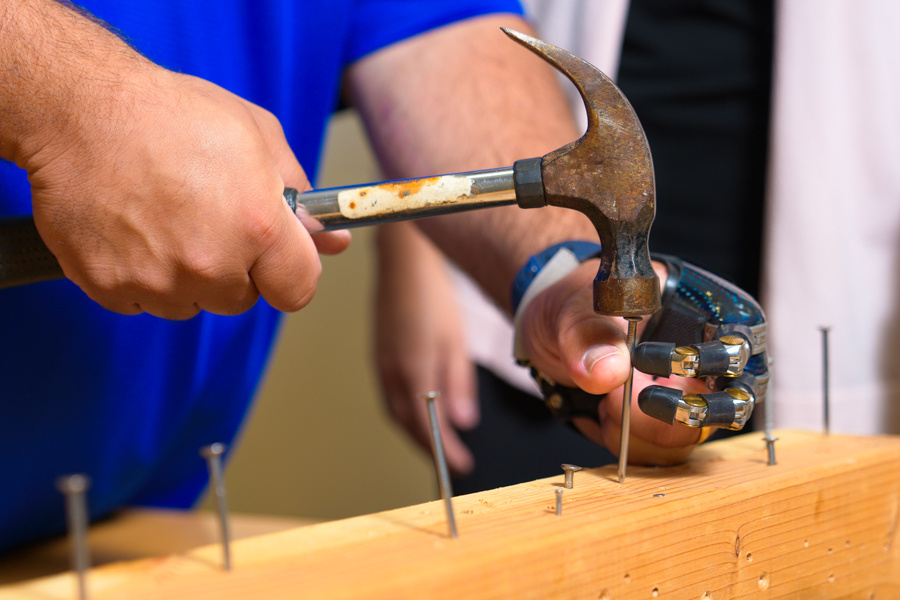

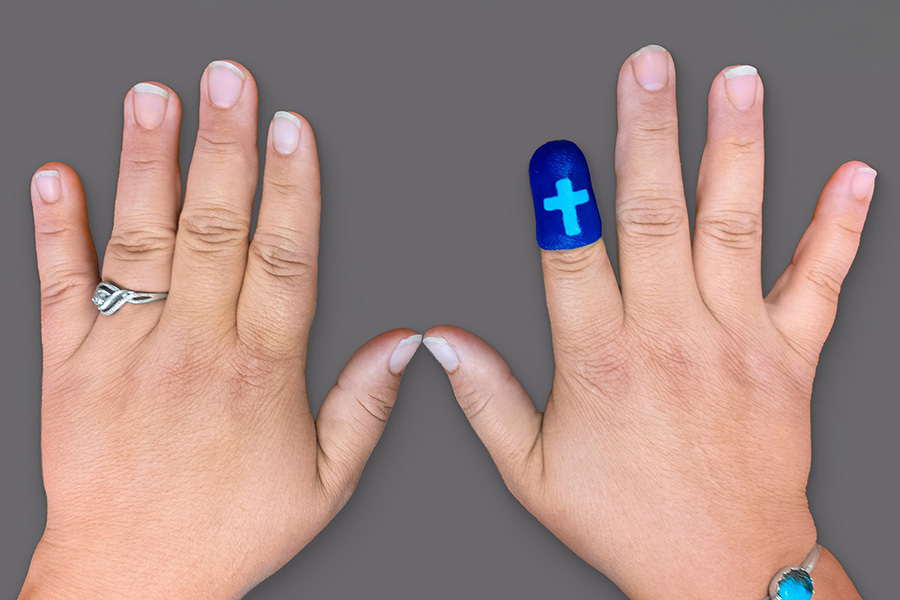
Both congenital hand differences and acquired amputations can vary widely. For people with fingertip loss, it can be just as devastating as higher levels of partial hand or arm loss. Although some may perceive the loss or absence of a fingertip to be a “small” issue, it is anything but “small” to those dealing with this challenge.

For anyone with a partial thumb amputation or difference, please see our blog article that addresses those prosthetic options. For anyone with a finger difference below the DIP joint (the joint on the finger closest to the nail) please check out our article on varying levels of finger differences.

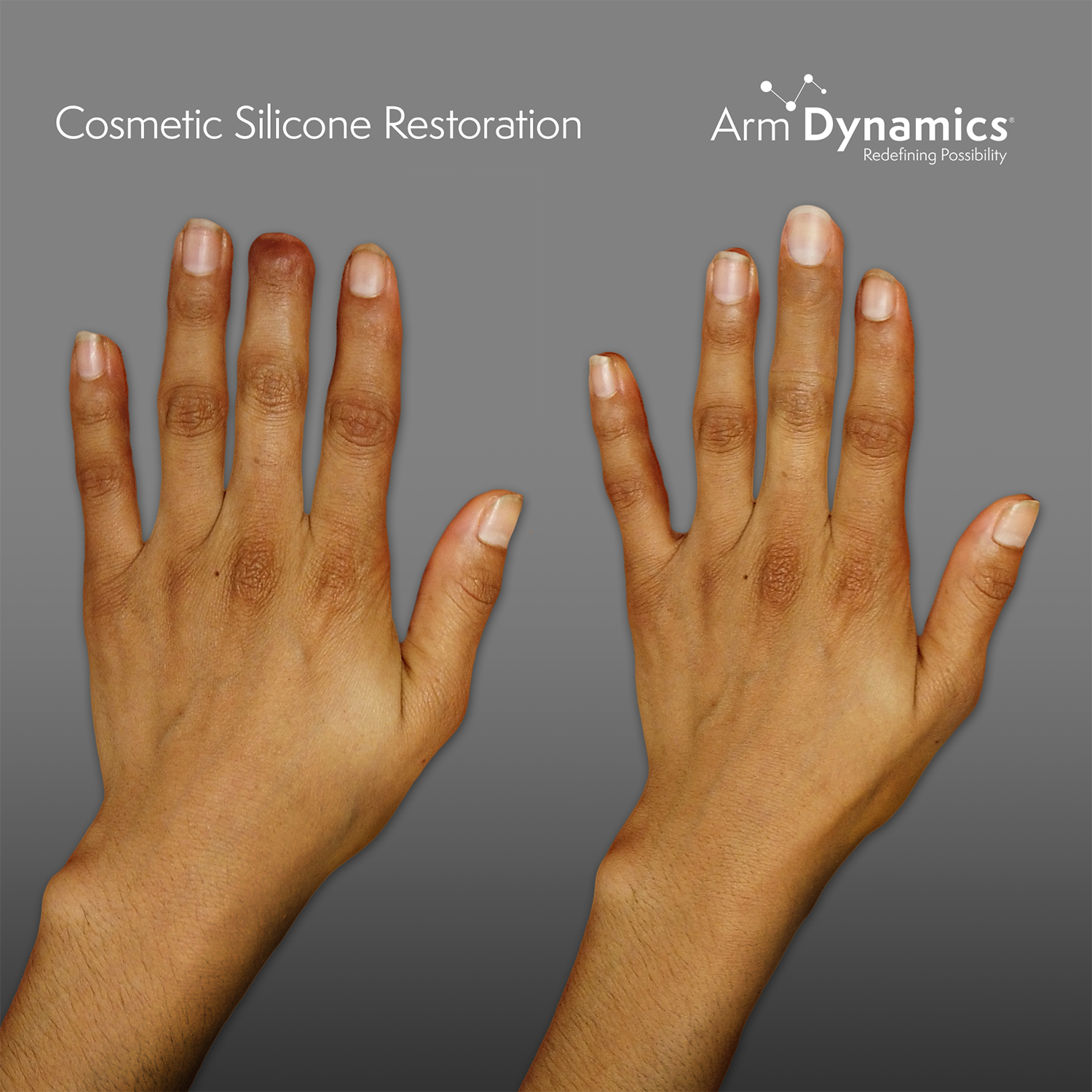
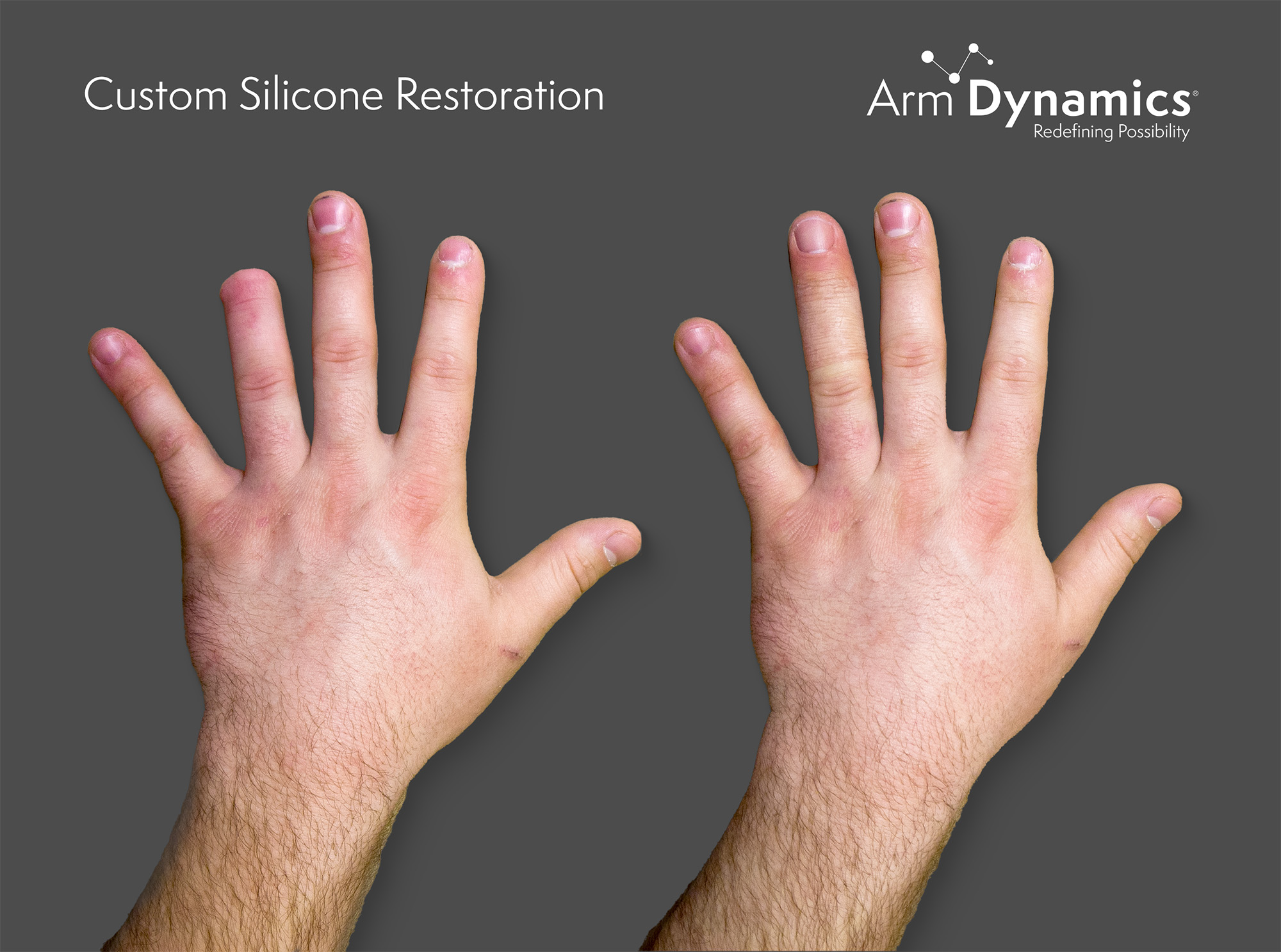
For people with a fingertip difference, our centers recommend a silicone fingertip. These prostheses can be custom silicone restorations that are painted to look like the person’s natural fingers, or low-definition protectors that are available in a range of colors patient’s choice. These items can offer length to help with activities like typing, and protection for the sensitive tip of the residual finger.

You can get an idea of what custom silicone restorations look like in the photos and video below:

Custom Silicone Restoration Fingertip IG
Joseph R. Johnson Custom silicone finger

For people who are looking for length and protection, a rolled silicone protector could be the answer. They can be made with clear silicone, the patient’s skin tone, or any color the patient chooses.

Our patient Curtis had some sensitivity on his residual fingertips, and he wanted added length so he could play his guitar. As you can see in the video below, he chose clear silicone. Oftentimes when we receive inquiries about fingertip prostheses, it’s from people who would like to be able to type with ease or to play a musical instrument.

You can see another option in the photo below, though it is a protector for a slightly lower injury:

Custom Silicone Finger Protector-Listing

Many of our patients who’ve lost a fingertip struggle with depression. Not only is this reaction common, it’s also understandable. Most people have lived with their fingers intact for 20, 30, 40 or more years. Suddenly losing a piece of your body, no matter how small, can be devastating. They may also struggle with the comments they receive from others. Our patient, Madee, who lost part of her dominant finger at about the PIP joint (middle joint), dislikes it when people call her “lucky” because she didn’t lose all of her finger. Madee (whose hand is pictured below) told us: “I wasn’t lucky. This is something I really struggle with – part of me was lost in an accident and just because I didn’t lose more, doesn’t make me lucky. It has nothing to do with luck. People say that stuff so they feel like they made you feel better by saying it, it isn't actually about me or acknowledging the struggles I went through and still go through. It actually discredits my experience with the loss of a digit. It implies that my struggle to cope without my digit isn't valid because I didn't lose more." Or conversely, some people may indeed feel lucky for that reason. Everyone reacts differently to their loss.

Madee-Red-Listing (1)

Part of the intake process for all our patients is the Wellness Inventory. This is a patient screening tool that was developed as an extension of our holistic care model, which addresses the physical, psychological, social and occupational concerns of people with upper limb loss or congenital limb difference. We want to make sure that our patients' psychological needs are being addressed.

The Wellness Inventory is given to our patients by our in-house occupational therapists. These clinical therapy specialists are at each of our centers to help our patients learn how to use their devices and adapt to things like typing, writing and using their hand ergonomically. Our therapists are also there to discuss and work on whatever goals their patient has.

Our prosthetists – the other half of our clinical team – also discuss and work on their patients’ goals. The main idea is to create a device that works best for each unique patient, be that blending in with others or protecting sensitive residual fingers – or both!

If you, or someone you know, would like to learn more about what types of fingertip prostheses are available, please contact us. You may also leave a comment below.

Subscribe!

No Comments Yet

Let us know what you think