In 2017, James was at work running hydraulic presses when an accident happened. He received burns and his tendon was severed on his left wrist. “I still had a hand; I just couldn’t move it. My hand was dead weight,” James told us. “My doctors did try to save my hand by using shark skin – but after a week it hadn’t quite gone as well as they’d hoped. So, the decision was made to amputate.” That was when James’ grieving process began. “I did feel sad for a few days. But then I accepted it.”

While James was in the hospital, he was asked if he would like to learn about prostheses and what kind he might want. “Do I want a harness for a body-powered device? Do I want something that is electric? What do I want? What do I need? I knew I wanted to – needed to – go back to work. My job requires heavy-duty lifting. Fifty pounds or more. My concern was that, with a harness, it wouldn’t be strong enough. So, when I met with the prosthetist at Arm Dynamics, I told him, I’m looking for a tool. Because my hand is more like a tool when I’m using it for work or tasks at home. That’s how I put it to him. And he and the occupational therapist understood. They both talked me through a lot of details and showed me all my options. But I shopped around. I went to a place in downtown Minneapolis, and they had me try on a body-powered, with a rubber band. And it just didn’t work for me – I couldn’t lift what I needed to lift without stretching out the rubber band part of it.

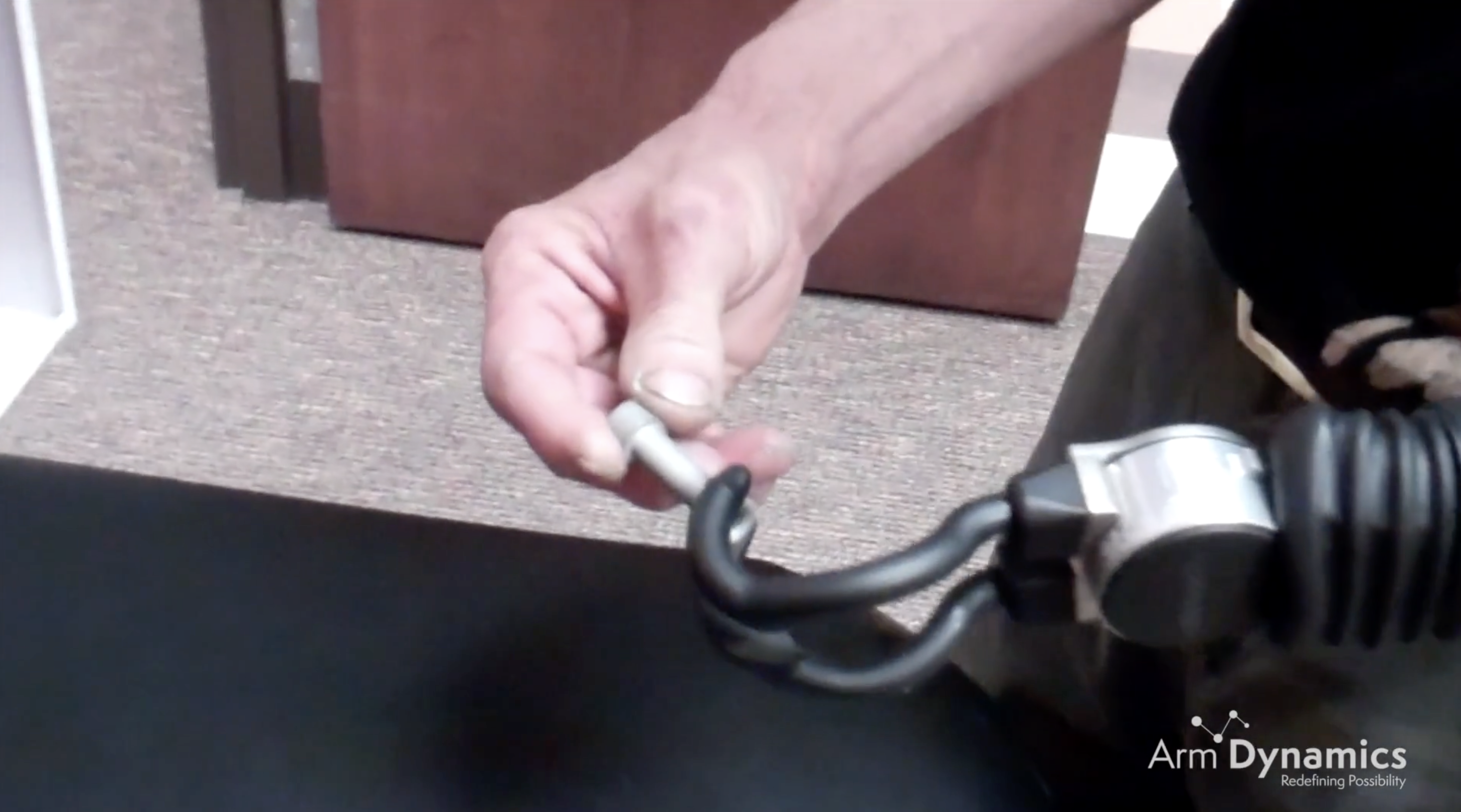
“Back at Arm Dynamics, which is where I decided to go, of course, they fit me with an ETD [see image below]. And that worked out really well for work. It helped out quite a bit with the automatic rolling machines that I was put on after my amputation. Those machines can put out 150 parts within a two-minute period. So, I had to then pull that bucket out when it was full of those parts, and those weigh a good 30 pounds. So that was how I used my hook.”

Arm Dynamics patient James using his AxonHook upper limb prosthesis to unthread a bolt.

But at home, James uses his multi-articulating myoelectric hand, which is a Michelangelo Hand. “For when I do the dishes, general housework, or if my wife and I go out to a restaurant.” But just a month or so before we spoke with James, he was back at his center to receive some activity-specific devices. “They made me something unique – it’s an activity-specific prosthesis that has a harness when I need a harness, but I can remove the harness and still use the prosthesis when needed. So, I use the harness when I’m working out, lifting weights – the attachment that I use to lift up pipes and bars, that opens and closes with the harness. But I can take the harness off and then bench press about 30 pounds around 60 times. With the harness on, I’ll use my activity-specific when I’m mowing the lawn, using the weed whacker, doing all my gardening.” It’s important for James to have these different options because his myoelectric hand is not made for weightlifting or yardwork.

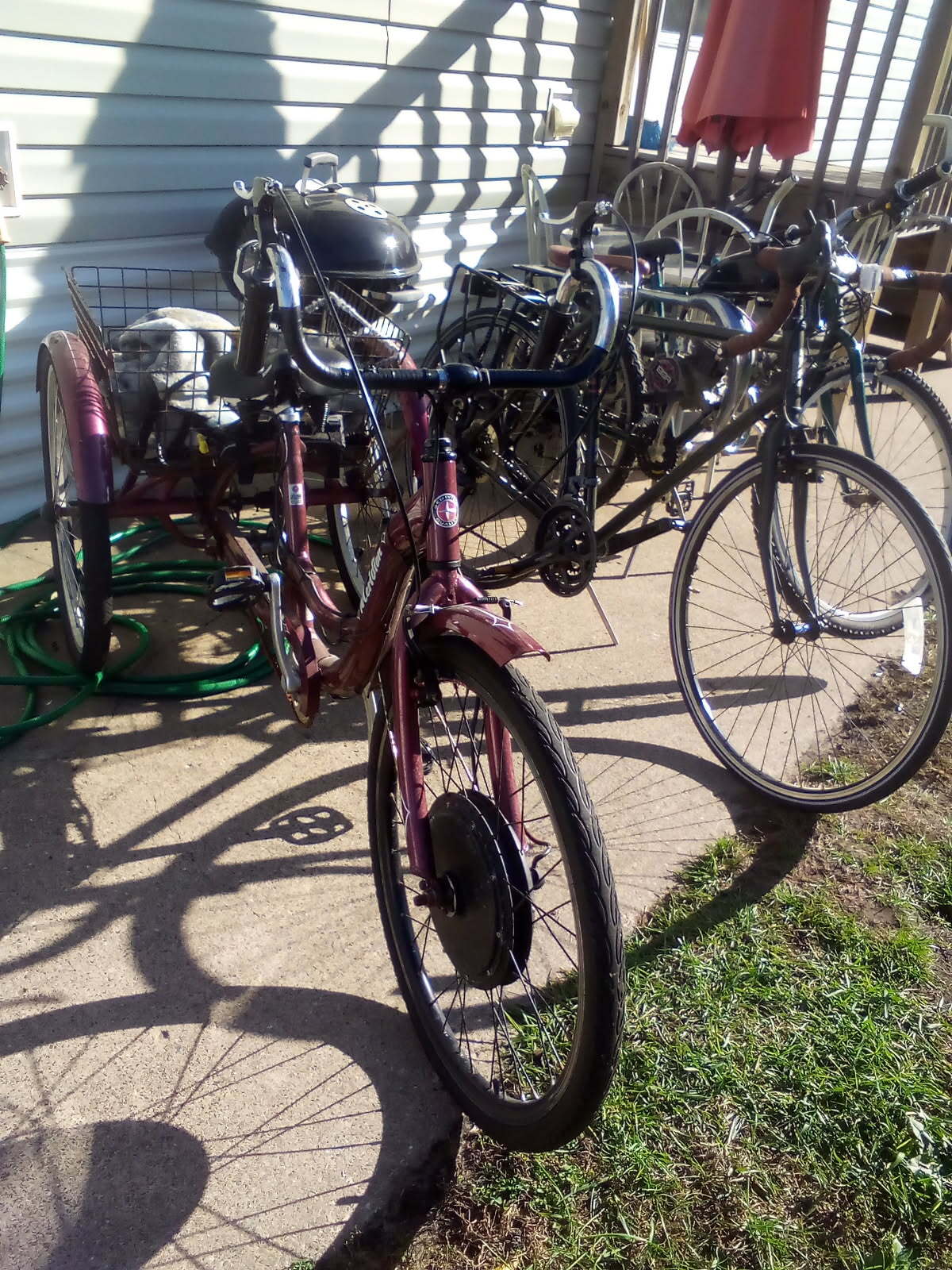
In addition to working out, James rides his bicycles a lot, several of which you can see in the picture below. “I have four bikes, and my wife has one – we don’t have a car. So we’re making it work all winter long in Minneapolis. Two of my bikes are electric, and on one of them I added a gas-powered motor, so it’s more motorcycle, but it’s a 21-speed mountain bike. That one is my pride and joy. I can ride that one on the bike trail. When I ride that one, I use my ETD – though now I have my activity-specific, which is safer because I can let go of the handlebar more easily. I also do a lot of repair and upkeep on my bikes, so I use my ETD to solder and more – winter can be pretty hectic on the bearings on the bikes. And then my fourth bike is my tricycle, with a basket in the middle back, the same as my wife, and that’s how we go grocery shopping. And then I’ll bike to the Arm Dynamics center – that’s like seven or eight miles from my house, I can take the bike trail. Takes an hour and a half, two hours. Nice ride along the Mississippi.”

Arm Dynamics patient James' bikes, which he rides using his upper limb protheses.

James does all of that while living with not just an upper limb difference but a lower limb difference as well. “In 2023, I had my left leg below the knee amputated. There were some issues at work, and I was pretty much always dehydrated. At some point, I twisted my ankle. When that happened, I damaged the arteries. I didn’t realize the extent of the damage. So I started developing calluses and sores … when I did go to the doctor, they told me I didn’t have any blood circulation in that foot. They put in a stent, and that helped, but it didn’t bring it all the way back where it needed to be. So, they amputated below the knee.”

That’s why James’ first thought when asked for what advice he’d give any person at the beginning of their prosthetic journey is: “Drink lots of water.” He laughed. “But also, your future will look different. Not bad, but different. Be patient. Do your best to not get frustrated. You really gotta focus on whatever the task is you’re trying to do. It’s not automatic – all that stuff you used to not have to think about – when you’re using your prosthesis at first, those tasks aren’t automatic.” James also had another important piece of advice: “Your mouth is not your hand. I know it’s hard at first, especially before you get a prosthesis, but your mouth is not your hand. That’s how I lost my front teeth. Minnesota winters are cold. Especially that first winter for me without my hand, in late 2017. I needed to get to work seven miles away, on my bike. So, when you bike, you have to have your hands covered. I was using an inner glove, a knit glove, a mitten, then heat warmers tucked into my outermost glove. But without my left hand, how was I supposed to put on my right gloves? That’s how I lost my teeth. Use something else. Use your knees, ask for help, figure it out, but don’t use your teeth.”

James was on disability after his leg amputation, and that basically led him to retire. “But I’m out and about every day, walking a mile and a half, two miles, taking my dog out. Biking. Working out. Life’s too short to stay at home. You gotta stay positive. The mindset is so important.”

We agree! Our clinicians do their best to help their patients with that positive mindset, supporting them and then helping with access to other support services. That’s in addition to the holistic prosthetic care we offer, which means fitting our patients with comfortable, functional prostheses and teaching them how to use them. We would love to hear from you if you’d like to learn more. You are also welcome to comment below with a message to James that we will pass on.

Subscribe!

No Comments Yet

Let us know what you think