
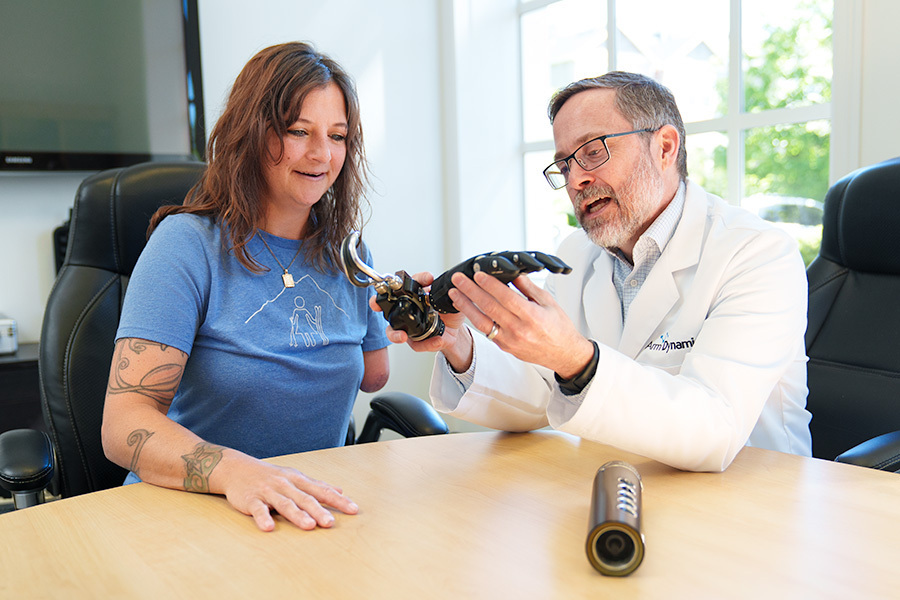
Your prosthetist asks you, “How does that feel?” But you’re not sure how to answer. You’ve never worn a prosthesis before. Only a few months ago, you still had your hand, or your arm or your fingers, and now you’re being asked to gauge how something feels, even though you don’t know how it’s supposed to feel. It doesn’t feel like your own hand. But it feels fine, I guess? After all, sometimes shoes don’t feel perfect the first time you put them on – they may have to be broken in, or they feel good in the store but give you blisters on their first outing. A baseball mitt needs time under the mattress before it fits. That shirt may be a little big, but it’ll shrink in the wash, right? There are many things in our life that are either “good enough” or “it’ll be fine.” But a prosthesis? Something you wear every day and need to fit well so it’s functional? “Good enough” isn’t, well, good enough. Which is why our prosthetists and clinical therapy specialists take the time to actually figure out, with you, how it feels.

Unfortunately, after his below elbow amputation due to a work accident, Chris’ prosthetic journey did not start well. “When I was at the hospital, I met with two different prosthetic companies. And I was told that all prosthetic places use the same parts. I ended up going with the place that was closest to me. But I found out the hard way that the place you go to is all the difference. Just because they’re closer doesn’t mean they’re better. It’s the customer service. It’s the attitude from the people who fit you. It’s the experience of the people who fit you. That is different, and I didn’t know that.”

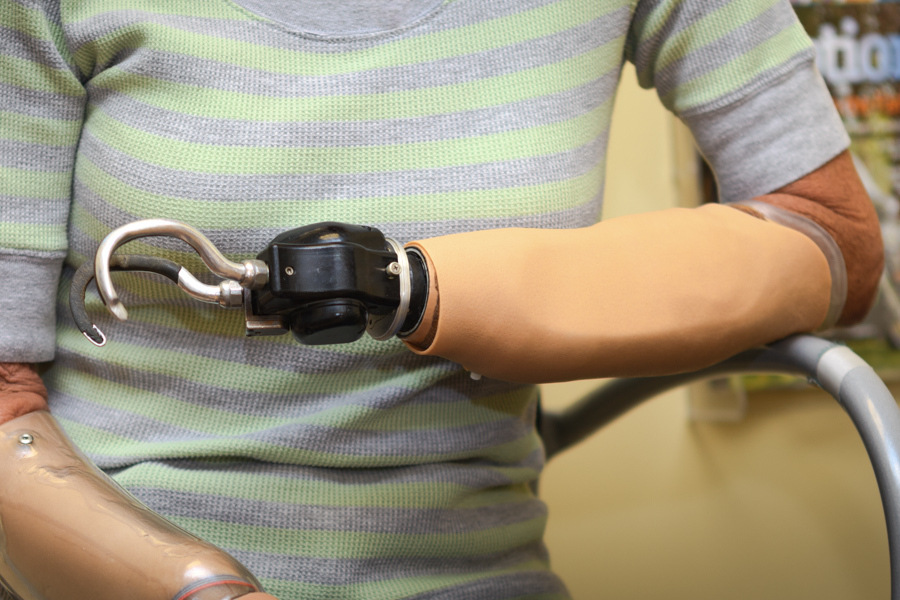
Chris was fit with an ETD. “I have some back issues, so I’m unable to wear a strap, or a harness, so it had to be a myoelectric. I live in Fargo, North Dakota, and I liked that there was a clinic near me, but that place was mainly a leg place. In the beginning with the prosthetic, from the casting to receiving, it took quite a while. Once I received it, it was really loose. I went back many times for quick appointments where they added some padding and sent me off. If anything more was needed, they would send it away or wait for the arm guy to come out to the office. The whole thing was not a good experience, whatsoever.”

Chris Temp 2

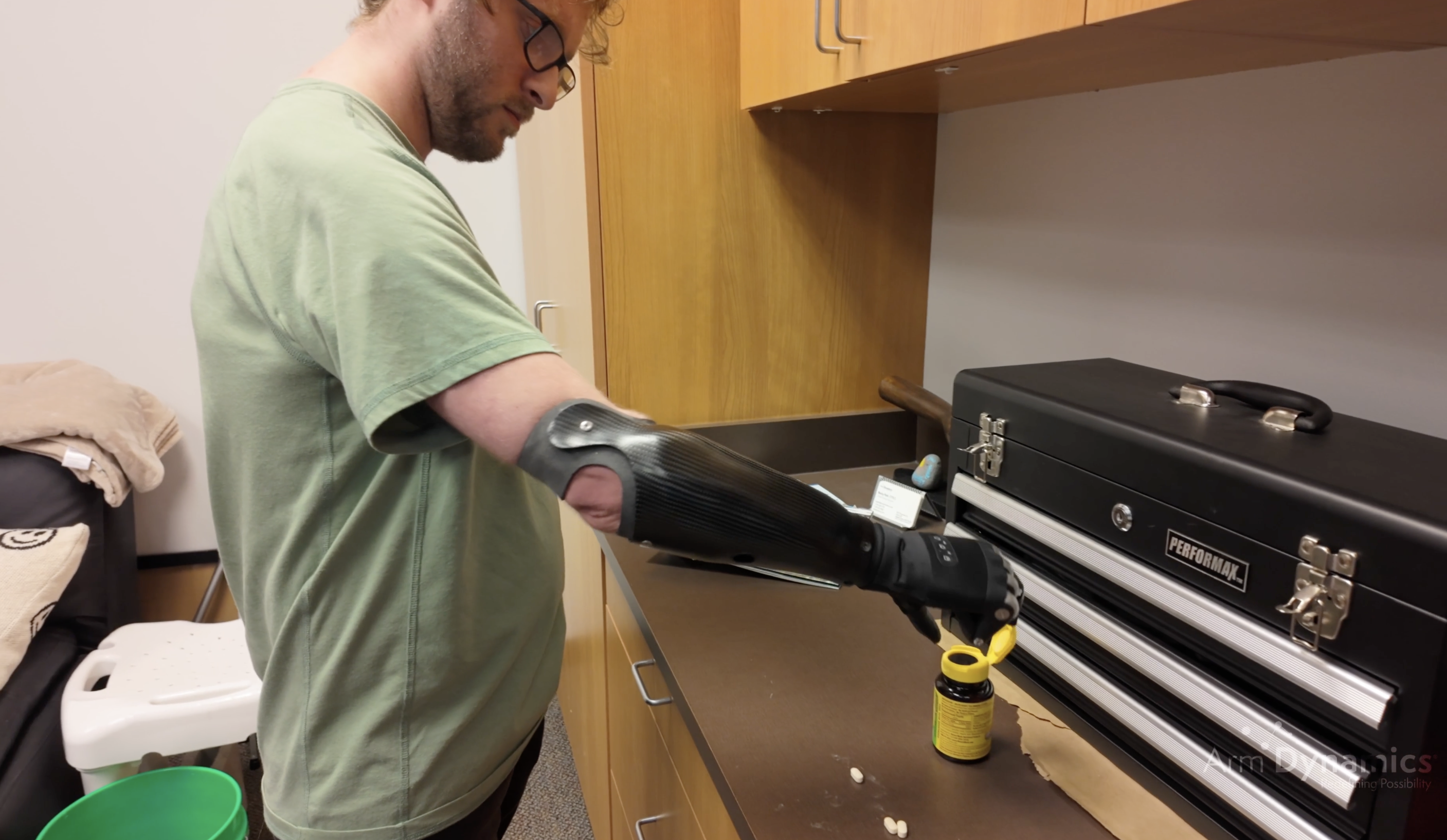
So, when Chris was able to come to our center in Maple Grove, MN, how were we able to improve his experience? Well, one way is because our prosthetists are experienced. They do an excellent job of creating sockets that fit our patients. We also have in-house clinical therapy specialists, who know the right questions to ask about how a prosthesis is fitting, while working with their patients on daily tasks. Chris’ therapist, Becky, walked him through sweeping, picking up large items and making a chicken Caesar salad, all the while asking what he was experiencing, if this or that was better, and tips for how to get the most out of his ETD. Overall, a much better experience.

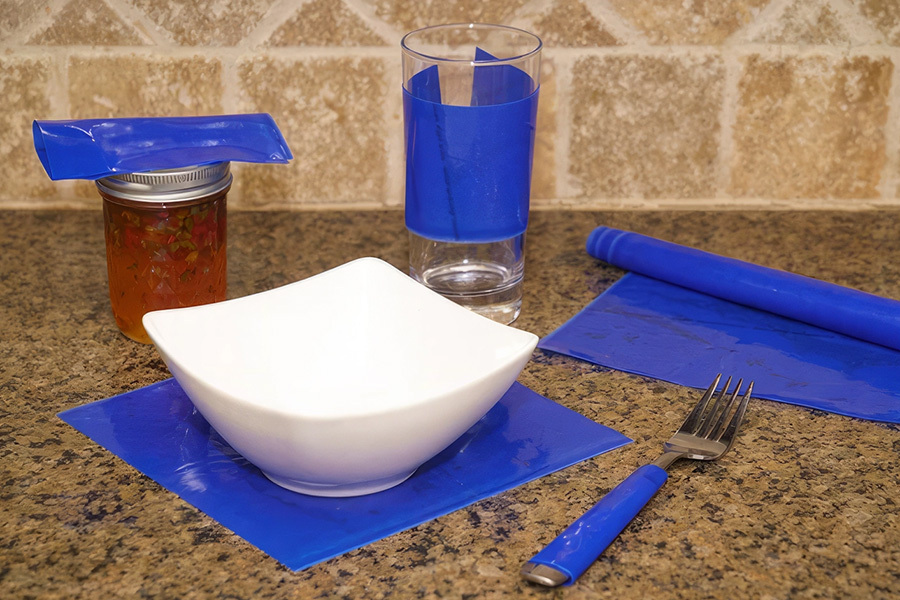
We asked Chris about what adaptive items he uses. “There aren’t a lot of things, because I don’t want to carry all that stuff around when I’m not at home. But I’ll use a bottle opener to open pop cans, or there’s a thing I use to open jars – I’ll use that when I’m not wearing my prosthetic. I have a buttoner for clothes, but I don’t wear a lot of button up shirts, so I don’t need it much. I will use Dycem [pictured below] – on my desk, or with plates or with my adaptive controller. I do have that – it’s the Sony Access Control for PlayStation – you can just buy it online. I can use my feet for the controls instead of my right hand.”

Dycem-Listing

Before we let Chris go, we asked for his advice for what he would tell someone right at the start of their prosthetic journey. “Do your research is one – look around and see how often the prosthetic place does upper extremities. But also – you can try to work through having an amputation and everything after it with a crap attitude or a good attitude, but either way, you got to work through it.”

Chris is right – there’s only one way through it. It’s really unfortunate that Chris’ first prosthetic care experience was so negative, but we are very glad that he stuck with it and kept trying to be fit properly and made his way to us. He’s happier now – especially since he was just fit with a TASKA hand. Since Chris is a three and a half hour drive away, our Maple Grove center made sure that he was their only patient that day, so he could get everything he needed before driving back home. They were able to ensure a good socket fit and the right myoelectric markers, along with teaching him how to use his new device so he can adapt to his TASKA hand in no time, maximizing his recovery.

To anyone out there looking for an upper limb prosthetic specialist – you have found it! If you’d like to learn more about the prosthetic care we offer, please contact us. You are also welcome to leave a comment for us, or for us to pass along to Chris, below.

Subscribe!

No Comments Yet

Let us know what you think