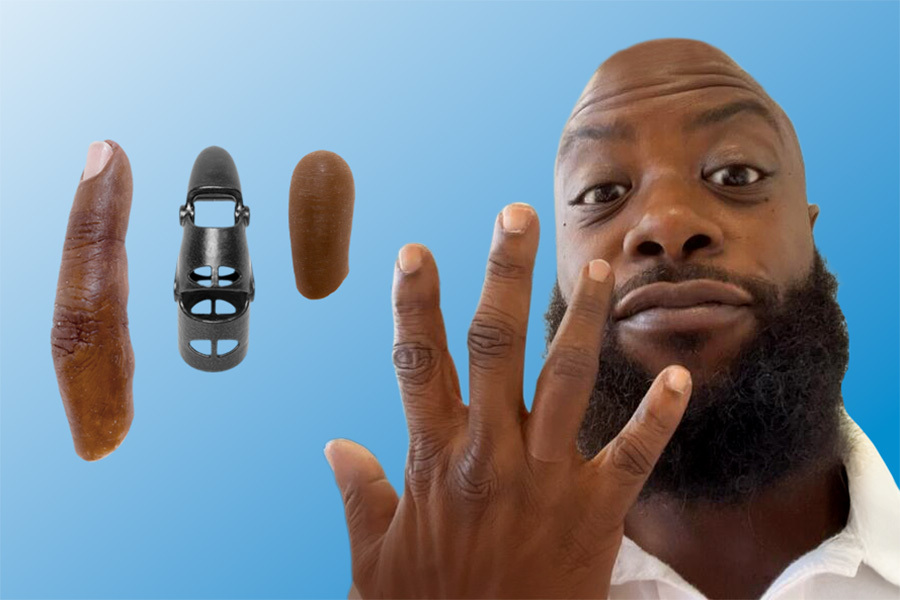

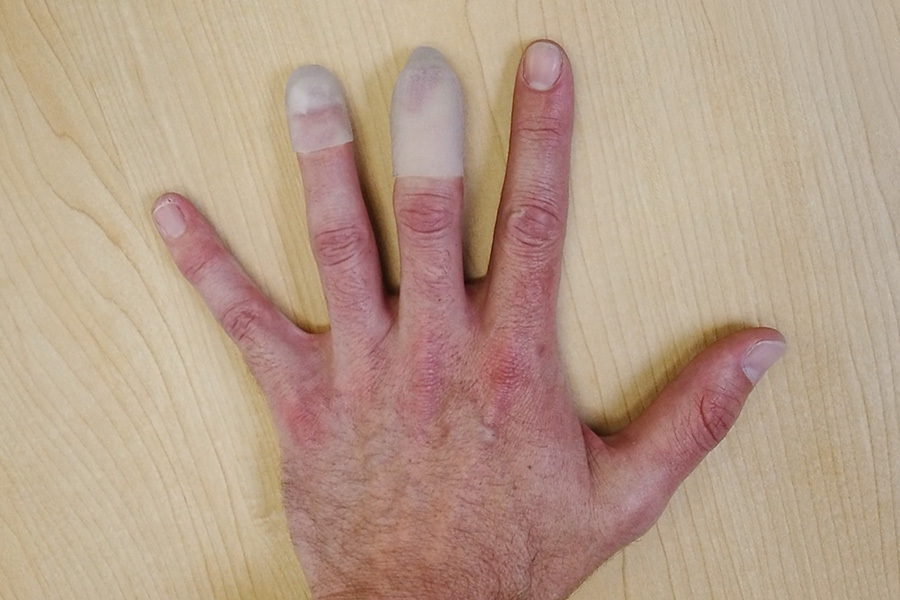
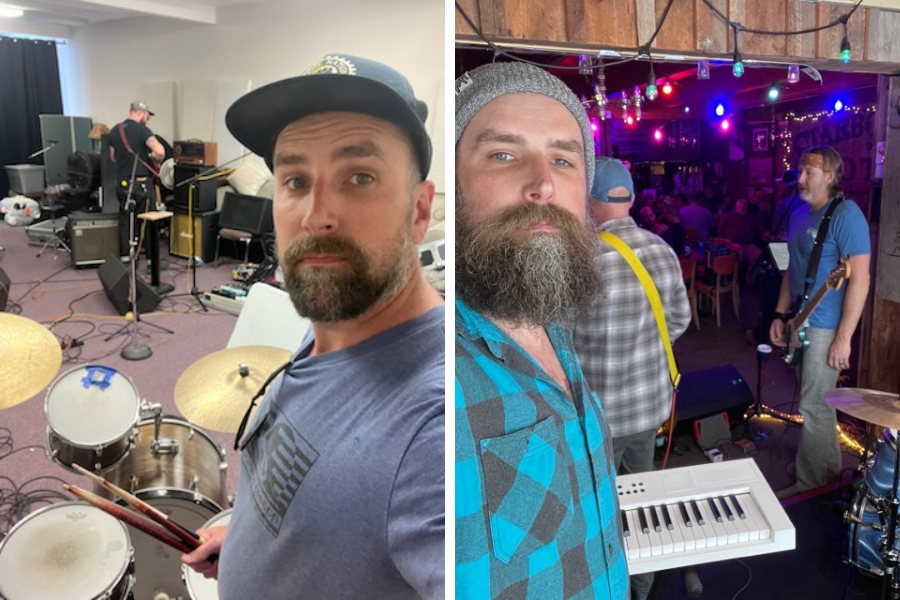
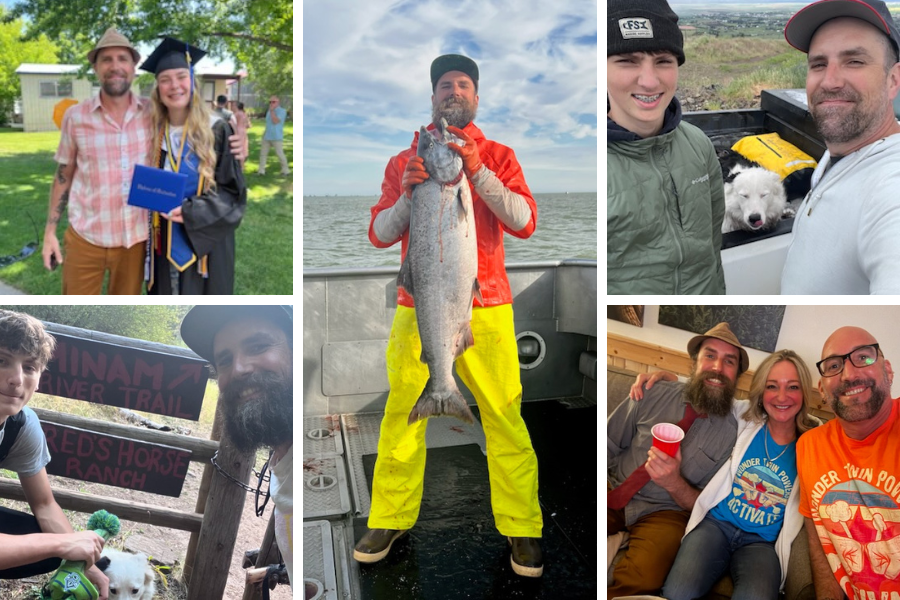
In July of 2025, Curtis was injured while on a commercial fishing boat in Alaska. His fingers were caught in an anchor line, and the line severed the tips of his middle and ring fingers on his left hand. “I went through a lot of emotions in that first half hour after the accident. A lot of what ifs, a lot of grief, a lot of fear, shock, really – but pretty quickly I came to a place of ‘Well, let’s just move forward and see how things go.’” For quite some time, Curtis had a lot of inflammation in his fingers: “I could hardly bend my middle finger, that middle knuckle was where all the inflammation landed. I wasn’t sure if I would ever be able to use it. But after six months or so of physical therapy, I was able to bend it. I had the use of my fingers mostly back, somewhat.”

But Curtis’ fingertips were very sensitive. “Putting any kind of pressure on those fingertips with that skin that had grown over – it was really painful. It’s not the same skin as my other fingertips. I could not play my guitar using those fingers. I was like, ‘Okay, I’ll just play the guitar with two fingers.’ My family and friends were joking with me, they were like, ‘Yeah, of course, you would use two fingers and it would sound as good as anyone else.’ But I knew I didn’t sound the same and I wasn’t able to play the way I wanted. I know I got lucky and that accident could have been so much worse. But that doesn’t mean I was where I wanted to be – I wanted to not have that sensitivity – not just for playing the guitar, but for everything I use my hands for. Physical therapy was so good for making improvements after my accident. Then I had to start adapting, getting back to real life. I’d done the work in rehab, doing the best I could, and now as far as I can get with that. But was there more that I could do?

“I started looking around on the internet, wondering what’s out there for me? There was a lot of stuff I could order, but I didn’t want to just get something that was generic, like, sized for anybody, then try it and get discouraged. I also didn’t want to sink money into something I wasn’t sure would work. At some point, I mentioned to my doctor that I had been looking around to see what I could do for something to cover my sensitive fingertips. I said, ‘I just wish there was a place that I could go.’ And he – his eyes lit up and he said, ‘There is!’ He wrote down ‘Arm Dynamics’ on a Post-It and said he would also reach out to them directly. He said that my insurance might actually pay for it. And so, long story short, I got everything approved by insurance. I had a three-day consultation, and in that time, I was fitted.”

Curtis-Presentation

Curtis continued, “I have two different sets of protectors. One of them is more of a regular, everyday protectors, and I do use those. The other one I wanted for my guitar. The guitar fingertip protector, we started working on those on day two. It was really cool because my prosthetist, Mac basically he hadn't really made that particular kind of thing before, but he was like just, like, ‘Yeah, we'll experiment with it and see what we come up with  we will definitely come up with something.’ He was confident that together we’d figure something out. So, he comes out with these two protectors, and as soon as I put them on, I started playing my guitar and the look of everyone in the room kind of mirrored my own shock. I hadn’t even like attempted to use those fingers to play guitar in over 10 months. But it just came right back.”

Curtis’ occupational therapist, Jamison, said, “When we initially met with Curtis, we asked him to bring in his instruments with him as part of therapy/fitting process. He brought in an electric keyboard, an acoustic guitar, and an electric guitar. Over the three days he was here, we made small changes based on Curtis’ feedback as part of the Arm Dynamics process. The three days were a serenade of great changes to come as Curtis got closer to his goal.”

While the transformation was impressive, it’s not instantaneous. “I'm still in a process of like just continuing to try and get as much range and function as I can because my fingers are still like kind of a little bit locked up. So, it’s a learning curve – I have to adjust to the new reality. But the fact that right out of the gate, the first moment I put it on, I was like able to do it, to play. It was pretty mind blowing. More than I could have imagined or hoped for. Since then, I've been starting to play a lot more. I just had a rehearsal recently for a gig in a couple weeks where I'll be accompanying a singer. I’m excited to try to get back into the rhythm of doing it and kind of rebuilding and just kind of like recreating some of that muscle memory now, just the sort of environment that I’m looking for."

Curtis

Curtis pauses and thinks. “The fact of the matter is, I'm limited, but I'm able to do so much more. Like, I couldn't do anything prior to having these tools at my disposal. But now that I have the tools that I need I’m going to see how this goes. I’m so thankful to be alive at this point in history  like, if my accident happened 50 years ago, I would have so fewer options. Less therapy, less tools, just less.”

“For anyone starting out on this journey, there’s a lot that you’re just going to have to roll with. Being open. You have to let yourself go through the process. You can’t ignore those feelings of despair and hopelessness. With time, you’ll learn how to adapt to it. You have to trust your gut, trust yourself to know that you can eventually figure out how to navigate it. When I spoke to my doctor about what I was looking for, that was definitely a lesson for me a good reminder to not be afraid to share with people, especially professionals. They're there to help you, but if you don't make your needs known or express what you want or what you’re lacking, they can’t do as much to help you."

Curtis 2

Requesting information from our patients about what they want out of their device is one of the tenets of the philosophy held by our Arm Dynamics team. Prostheses are tools, and they make a difference in our patients’ lives every day, from work to recreation to just feeling good in their own body.

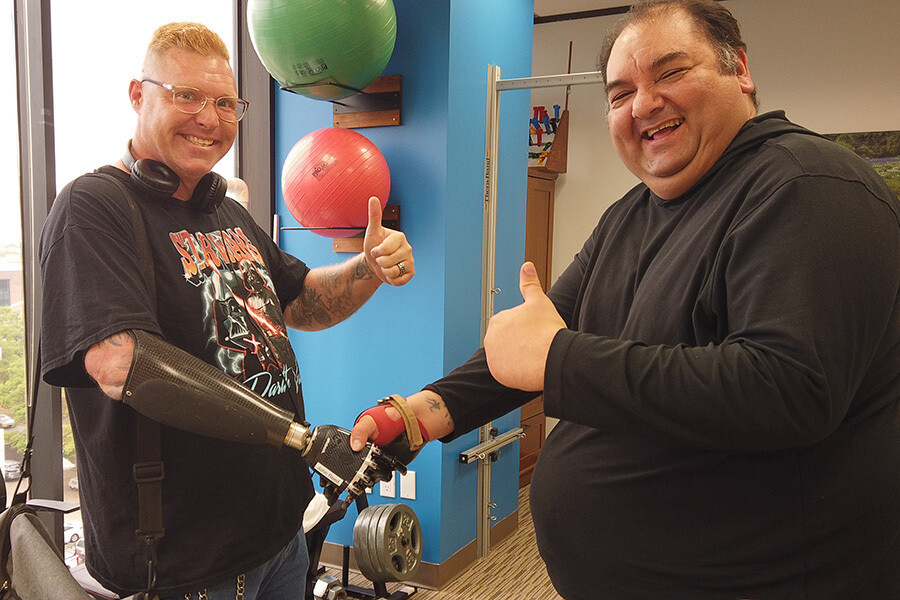
Our prosthetists, like Mac, create prostheses that help our patients reach their goals, and our clinical therapy specialists help people learn how to use those prostheses. It’s a process that got our patient Karen to be able to kayak for the first time, Gerry to be able to weld as a bilateral amputee, and allowed Curtis to play his guitar.

If you, or someone you know, would like to know more about the prosthetic care we provide, please contact us. If you have any comments, please leave them below.

Subscribe!

No Comments Yet

Let us know what you think