
Our blog article team spoke with our patient Chris twice to get his story, and those interviews were about three months apart. What changed in those three months? Quite a bit, actually!

The first time we spoke with Chris, he explained how he had lost his fingers and thumb on his dominant left hand in a recreational accident. What Chris wanted most from his prosthesis was for it to be sturdy and functional. His prosthetist, Rob in our Dallas center, fit him with a wrist-driven device that featured Point Designs Digits. Chris: “It’s not my work life that is going to be hard on my prosthesis – but my home life, ‘cause once I’m home, I want to fix my car, I want to build things, I want to play in the mud, as they say, so I needed something heavy-duty. An electric hand may work well, but I’d break it within 10 minutes. So, I got my first Point Designs device, and it just wasn’t working right for me.”

While Chris and Rob worked through ways to optimize that device for practical use, Chris was fit with a passive silicone restoration. Chris explained: “I wore it for work, going into different offices. That hand looks great and had many people fooled [into thinking it was my real hand].” But what frustrated Chris was its limited function. It did offer him more than just its appearance: he could use it to, for instance, hold open a door, and it provided protection for his residual limb. But what Chris really needed was active grasp. “While my job is not manually intensive labor, it does require me to carry things, hold items, open doors, hold my iPad, pull my suitcase through an airport, things like that.” Chris sometimes tried using his sound hand for these activities, but it put a lot of strain on it. “In many cases, trying to do things was nearly impossible.” That’s what motivated Chris to figure out how he could learn to make the Point Designs device work for him.

When we first spoke with Chris, he was getting ready to travel to Dallas from his home in Oklahoma, and work with Rob to figure out what they could do to make the prosthesis more functional. “Right now, it sits on a shelf, and I really want to be using it. I have some ideas about how to make it work. I’m going to get with Rob to show him my ideas for how to make this device really work for me.” Chris’ insurance was not willing to pay for another prosthesis, and he knew that his Point Design Digits had a lot of potential, so he was excited about seeing what could happen.

Rob-Chris-1
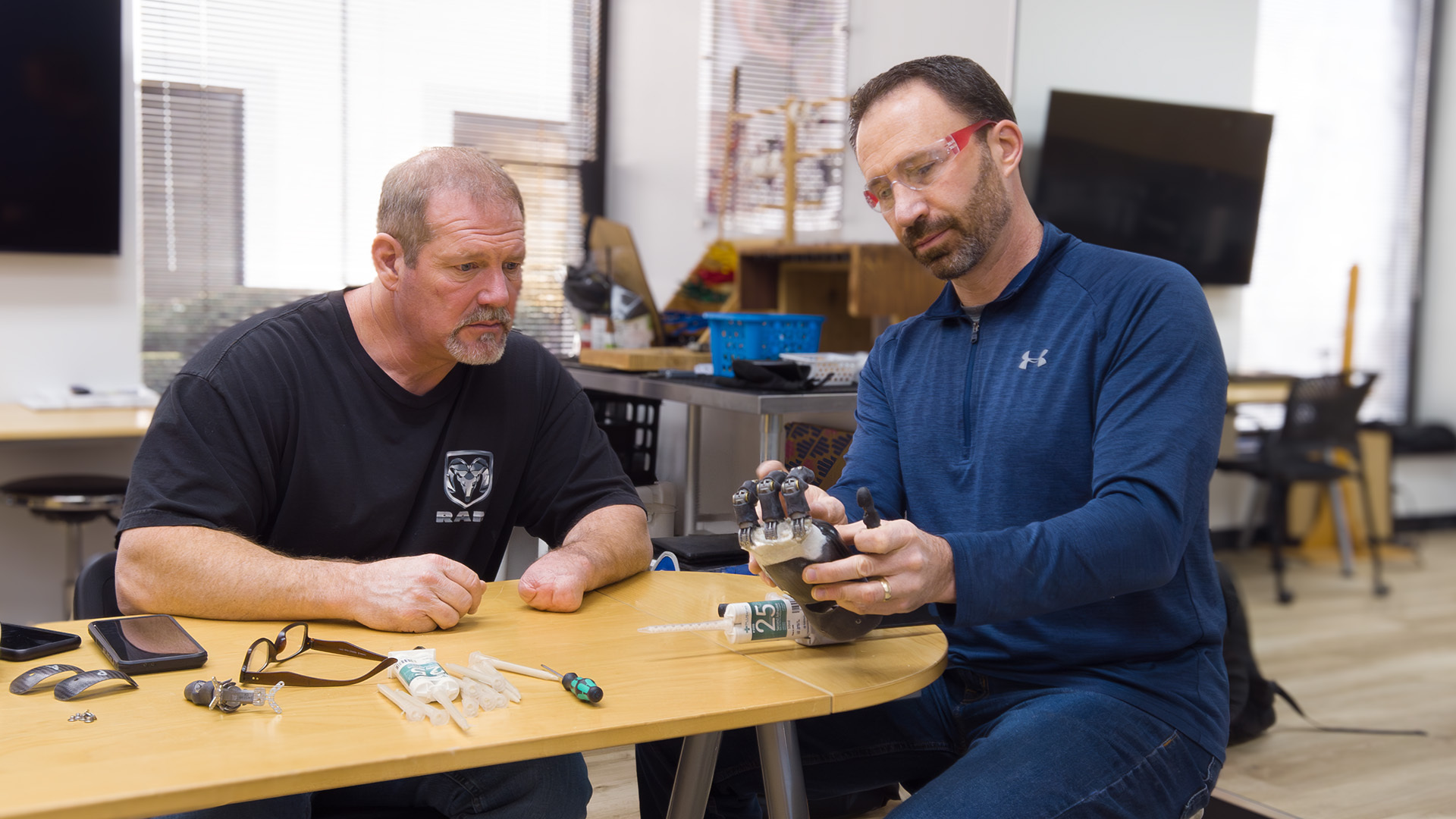
Chris and Rob work on making Chris' prosthesis more functional.

After meeting with Rob, Chris told us he was right to be excited. “Rob made some of the adjustments with his team in Dallas, all the stuff we’d talked about it. He sent it back to me, and I’ve been wearing it ever since, so over two months now. I’ve worn it every day, except for maybe three days where I was just hanging around the house and not working on any projects. What Rob and his team have done to help me out has been just  words can't describe it. I have a functional device, and I use it all the time.” The original design of the prosthesis had some wrist-driven action, meaning when Chris moved his wrist up or down, it would allow the Point Thumb to move toward or away from the Point Digits. While that is a design that works well for many of our patients, it was not working well for Chris. “So, Rob and I talked about it, and he essentially fixed the Point Thumb to the frame of the device. So the wrist movement is gone and now it’s working for me. All those things I need to do for work that I mentioned before, those are now all things I can do, and none of those were tasks I could do with my silicone restoration hand.”

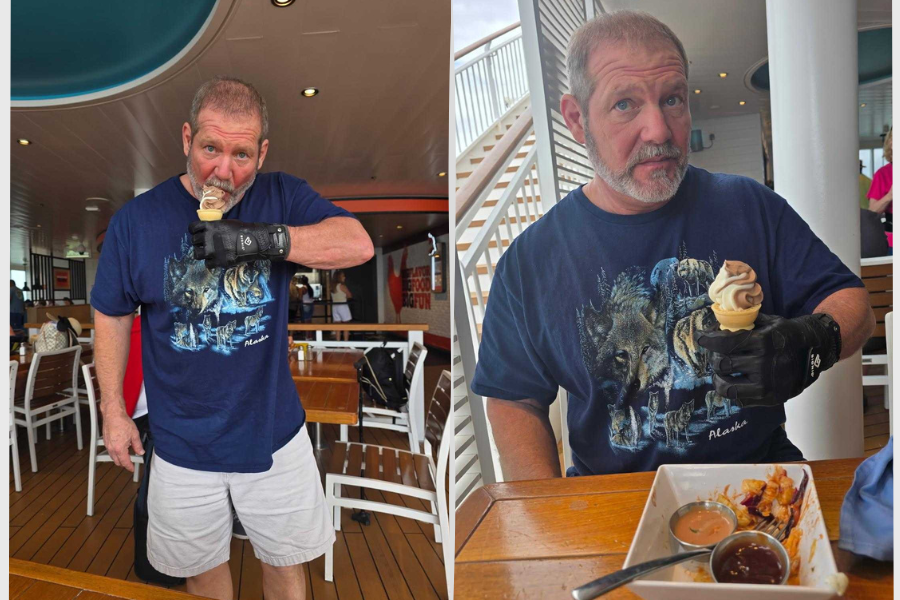
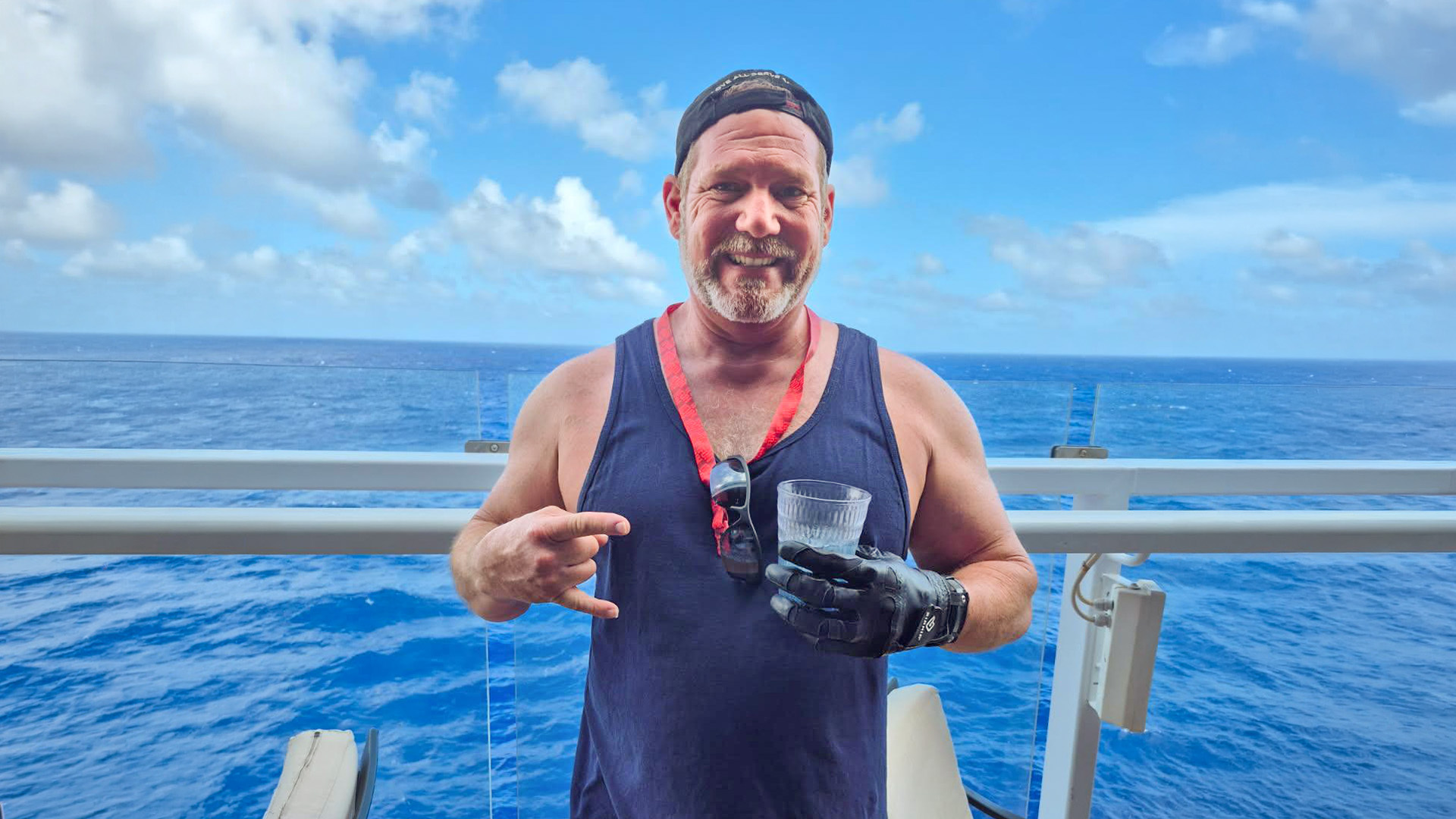
Once Chris received his reconfigured device, he began wearing it with a black golf glove. “It just looks better to me, and it keeps the device from getting dirty – I’m so protective of this thing now.” Chris and Rob are still making little adjustments. “I have to go into Dallas several times a year for my job, so when I go there, I stop by the center, and I let Rob know what I’m looking for. This past time, I wanted the part where it attaches around my wrist to be slimmed down a little – so he made a slit on both sides of my wrist and now it’s tighter where I wanted it to be.”

In February of 2026, Chris and his wife went on a cruise. His wife, Amy, was nice enough to send some pictures below, and her commentary: "Chris found the ice cream on board right way. Now THAT'S making use of an Arm Dynamics' prosthetic!"

Chris
Chris

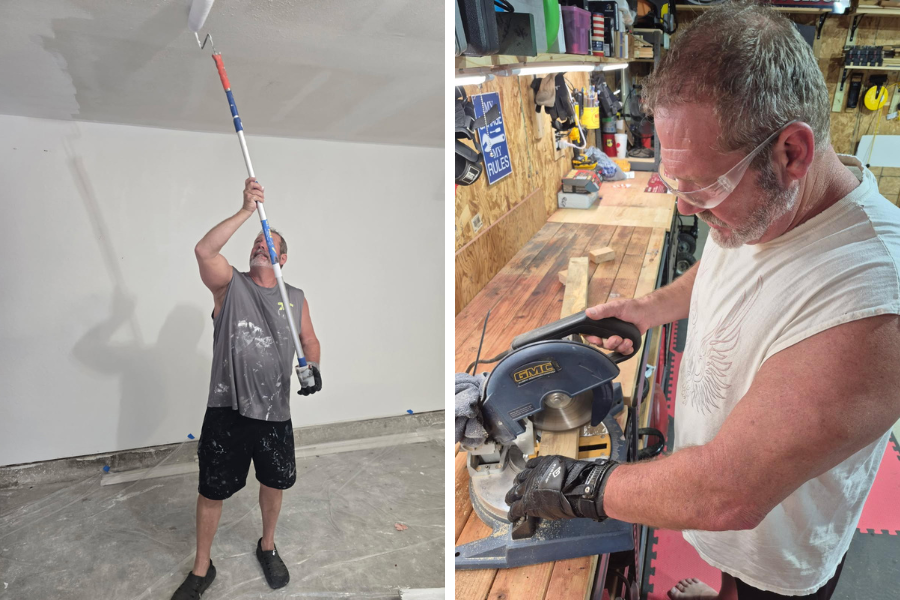
“I’m wearing my prosthesis from about 6:30 in the morning to nine at night. I used to be left-handed, and so I’ve had to adjust, but I use it to type, I figured out how to use a fork with my prosthesis with some adaptive tubes. I’m using it to hold plates in the buffet line at conferences, and to close doors. Since I’ve been wearing this modified device all the time, my right hand no longer hurts like it used to.”

There it is. While giving people back the ability to function in their daily life is a huge part of why each of our team members wants to be here, giving people the ability to live with less pain and less overuse symptoms is another wonderful reason to do what we do.

“I am not someone to tell people to be patient. I’m terrible at it. But having patience is what led me to this point, that led me to having a functional prosthesis that I use all the time. So, my advice is, if you can, be patient. And if you can meet with someone with your amputation level, go for it. It’s helpful to talk with someone who knows exactly what you’re dealing with.”

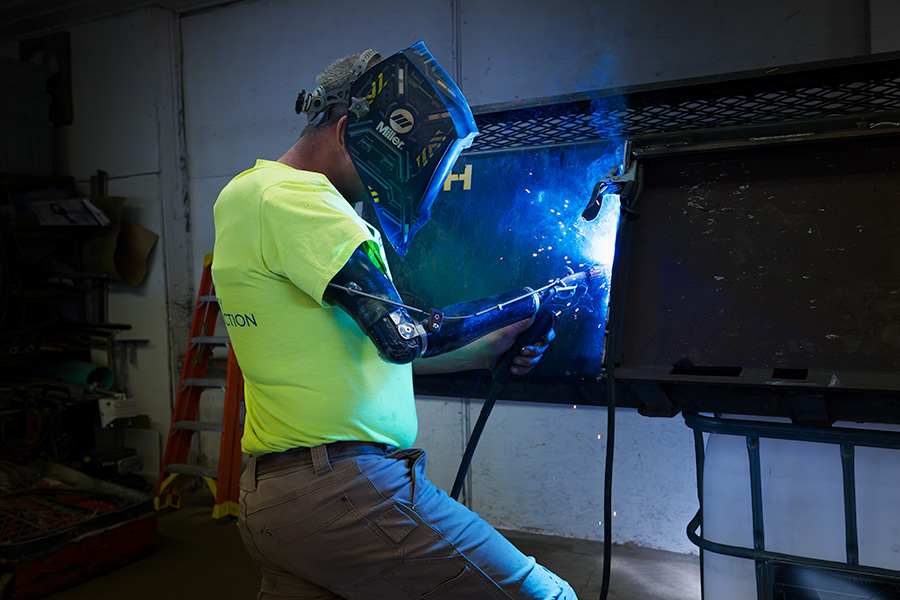
Chris really emphasized this point: “I want to be very clear, Rob and his crew strive to get amputees fit with what will work the best, and they don't give up until it's achieved. My prosthetic will never replace the hand I was born with, but it's helped me get back to doing things (with some expected limitations) that I thought I'd lost after my accident. My wife Amy always called me her ‘man child’ due to the things I like to do outside of work. Now I’m able to utilize this prosthetic, for the most part, to continue being her ‘man child.’ It’s nice to have the silicone restoration for when I don’t want my prosthesis to stand out, but that’s not the one I use most, by far. With my Point Designs Digits I can fish, work on my hot rod, play with power tools, and more. It is so much easier now, and my functionality at work has drastically improved!”

Chris 1

Prosthetist Rob pursues perfection and that means Chris now has a prosthesis that he relies on. Our team of technicians helped him create and re-create Chris’ device until it worked. Carina, Chris’ occupational therapist, helped him learn how to use his device, and the rest of the team at our Dallas center and beyond supported Chris’ prosthetic journey in their own ways. Each of our five centers around the US provide our patients with this same level of commitment.

If that kind of prosthetic care is something you’d like to learn more about, please contact us. If you’d like to leave a comment or a message for us to pass on to Chris, please do so below.

Subscribe!

No Comments Yet

Let us know what you think