
When an upper limb amputation happens to someone, there are a lot of unknowns. Many people may see it as “the end” of many things they’ve known – “the end” of their ability to work, “the end” of their social life, or “the end” of their ability to be independent. That’s all understandable. Most people have never met someone with an upper limb difference, meaning they’ve never seen how someone in that situation could live a “normal” life. But our most successful patients share two traits: 1: After grieving their loss, they look at their amputation as a challenge, and 2: They make sure they learn more about other people with the same level of amputation. It may be watching videos online, speaking with someone on the phone, or meeting them in person.

When someone with an amputation is ready to see their limb difference as a challenge, rather than as “the end,” they can start to figure out what’s next. This reframing does not mean there won’t be frustrations, or bad days, or times when they thought they had something figured out, only to fail on the next go. But reframing gives people the freedom to say, “Okay, let’s try again.” Many people know how to approach a challenge, and the idea of not being afraid to fail can make all the difference. Our patient Gerry lost both his arms in an on-the-job accident in 2015. He owns a small farm in Illinois and gets all sorts of things done around the property: welding, yardwork, driving, brick work. His prosthetist, Julian, at our Kansas City center, knows that Gerry’s positive attitude is the force behind these achievements. Julian: “I think that one of the reasons why Gerry is so successful is that early on, when he failed a bunch, it didn’t cause him to give up. He worked harder. He thought, ‘Well, I’m going to try again. I’m going to try a different way.’” But it took time. “At first,” Julian remembered, “Gerry’s function was basic and tentative — very thoughtful. But then, within three to six months after I fit him, his function became more automatic and routine, and then those little light bulbs would come on, and he’d jump on his tractor to try again or drive his truck or his car. He was able to do those things that gave him satisfaction before he had his accident.”

What can help with reframing? Seeing people with the same level of amputation as yours thrive. Did you ever take a theater class? One thing most theater teachers have in common is that they ask their students to go see a play or musical. Why? Because they want you to understand what a successful theater production looks like before you try it yourself.

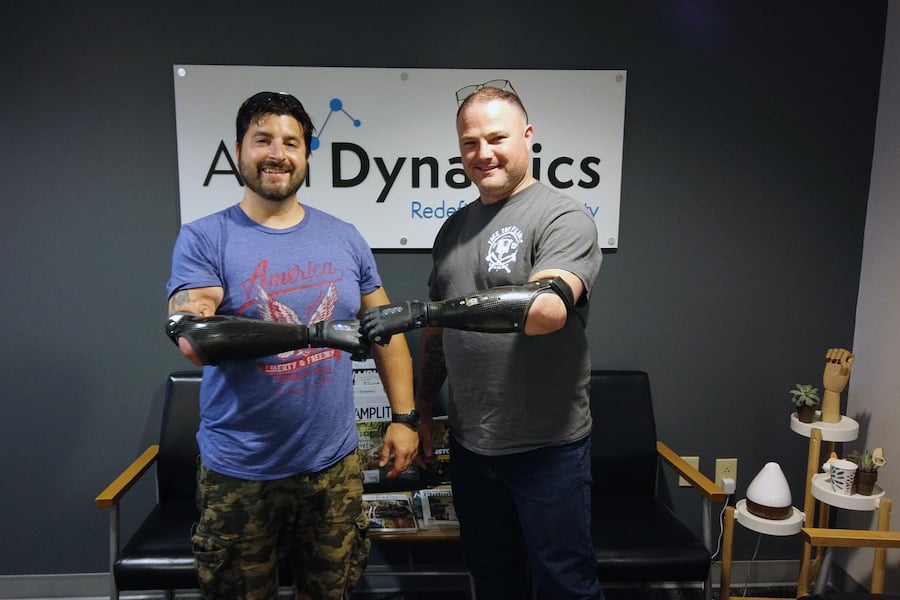
Peer Support Steve and Brian with TASKA copy-1
Steve (left) was new to his device when he met Brian, who had been using his TASKA hand for over a year at that point.

The clinical therapy specialist at our Kansas City center, Lauren, had these thoughts: “There are many different support avenues to take, but one of the most crucial is to speak with someone with an amputation. Their experiences are invaluable. But also, building up the community around you, accepting help, and seeing a counselor. Healing from the mental aspects of an amputation is just as important as healing from the physical ones.”

Helping patients reframe their limb difference is one of the tools that counselors may use. While someone may never feel positive about their amputation, many of our patients have arrived at a place of acceptance, even saying that they wouldn’t change the past because they like where they are now.

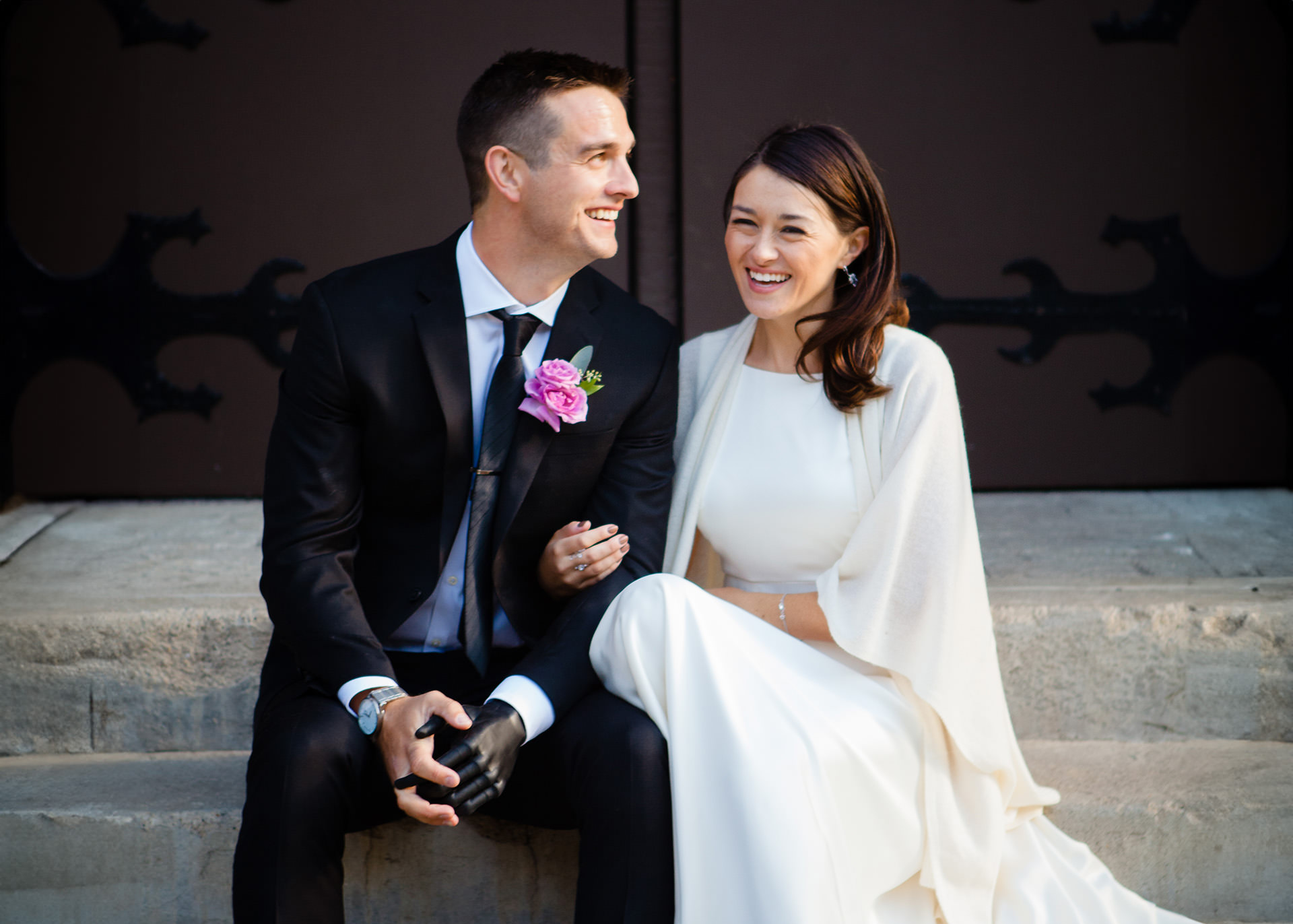
Reframing is not something that happens suddenly. For even the most positive people, it takes time. For Gerry, who has always been a super positive person, the first three years after losing both his arms were very difficult. For our patient Tom (pictured below), who was 17 when he lost his hand at the wrist, it took time to adjust to how he wanted to appear to others. At first, he wanted a single-motor hand because those offer some function while looking similar to a “regular” hand. But a few years later, he embraced the robotic look and went for an i-Limb Quantum. “My attitude completely changed. Which has made all the reactions from people I talk to change as well. The hand has become a huge part of me. I use it a lot to talk, I always have it out front and center – not on purpose, but because I’m using it and I’m interacting with it in a more natural way than I was before. I think from those initial stages of limb loss and that place you are right after it happens, I think time is a huge part of it. You can do many things to support yourself, but it takes time and interactions with others to not see yourself as diminished or missing something. You are still who you were before – it will be alright.”

Tom Seibert and his bride at their wedding

Even if you find yourself in a place where you’re not ready to reframe your amputation, just knowing that other people have been able to do so and have thrived can give you hope, and hope can make those everyday frustrations and setbacks a little easier to handle.

Restoring hope is one of the top reasons our Arm Dynamics team members say they enjoy their job. So many on our team love watching our patients come in for their first appointment and walk out with a look of hope in their eyes.

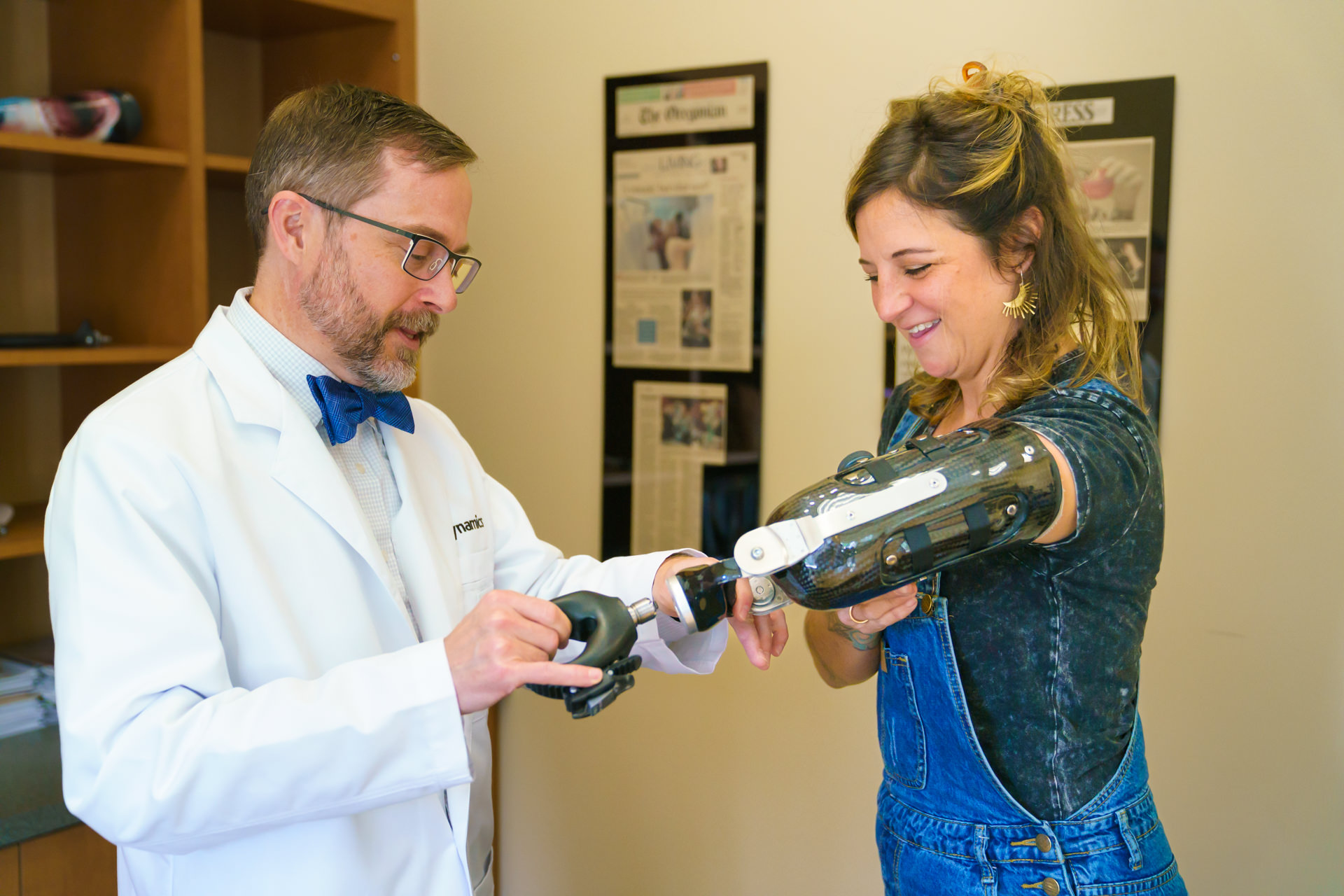
If you or someone you know is looking for holistic prosthetic care, support in the prosthetic journey and peer connections, please contact us. Our prosthetists fit their patients with functional, attractive prostheses and our clinical therapy specialists teach our patients how to use their devices.

If you’d like to leave a comment, please do so below.

Subscribe!

No Comments Yet

Let us know what you think