
Our patients have a variety of goals – sometimes they are work-related goals, sometimes the goal is to be able to independently take care of tasks around the house. Many of our patients are interested in being able to work out in the gym. For some of our patients, it’s about getting back to the routine they had before a traumatic amputation. For others, it’s about trying new activities that they were reluctant to try as someone with a congenital limb difference – or that they had been trying but found painful. No matter the reason, all our prosthetists, prosthetic assistants and technicians take on that goal with them and create a prosthesis that allows them to work out.

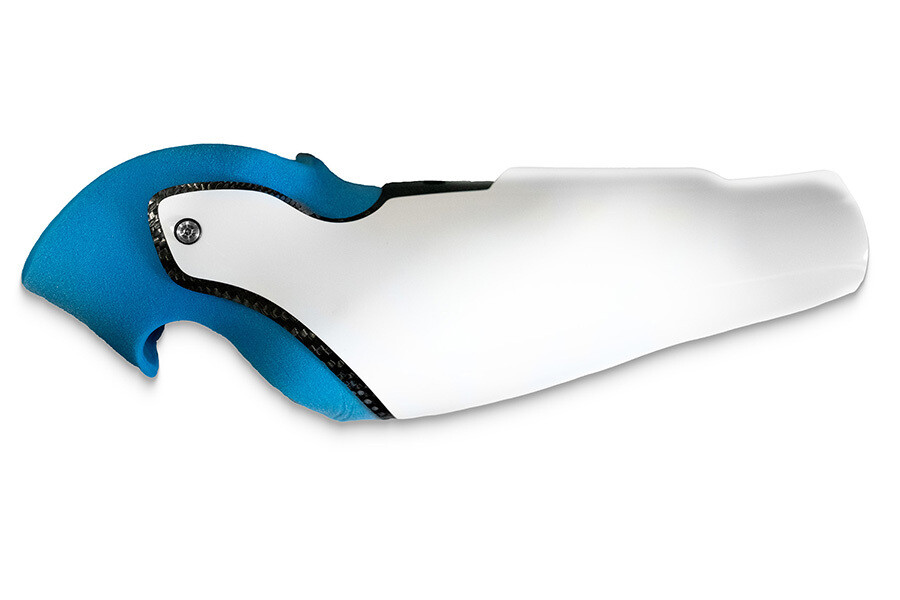
When creating a prosthesis that is made for the gym, there are several components needed. One is, of course, the terminal device. You can check out a lot of the available options in our article that features multiple videos of people using their device: Upper Limb Activity-Specific Prosthetic Devices in Action. Another is a strong frame that can handle the weights being used and helps the patient feel balanced while they are wearing it. There is also the socket. For many of our patients, having a silicone socket as part of their activity-specific prosthesis allows them to feel secure as they work out, along with a variety of other benefits.

Because silicone mimics the properties of human skin, it’s flexible and comfortable. It also feels cooler than the alternative type of socket, thermoplastic. Patients report sweating less inside their socket, which is one of the key reasons our prosthetists use it when creating activity-specific prostheses. Silicone sockets also allow more range of motion for the patients while keeping the device secure.

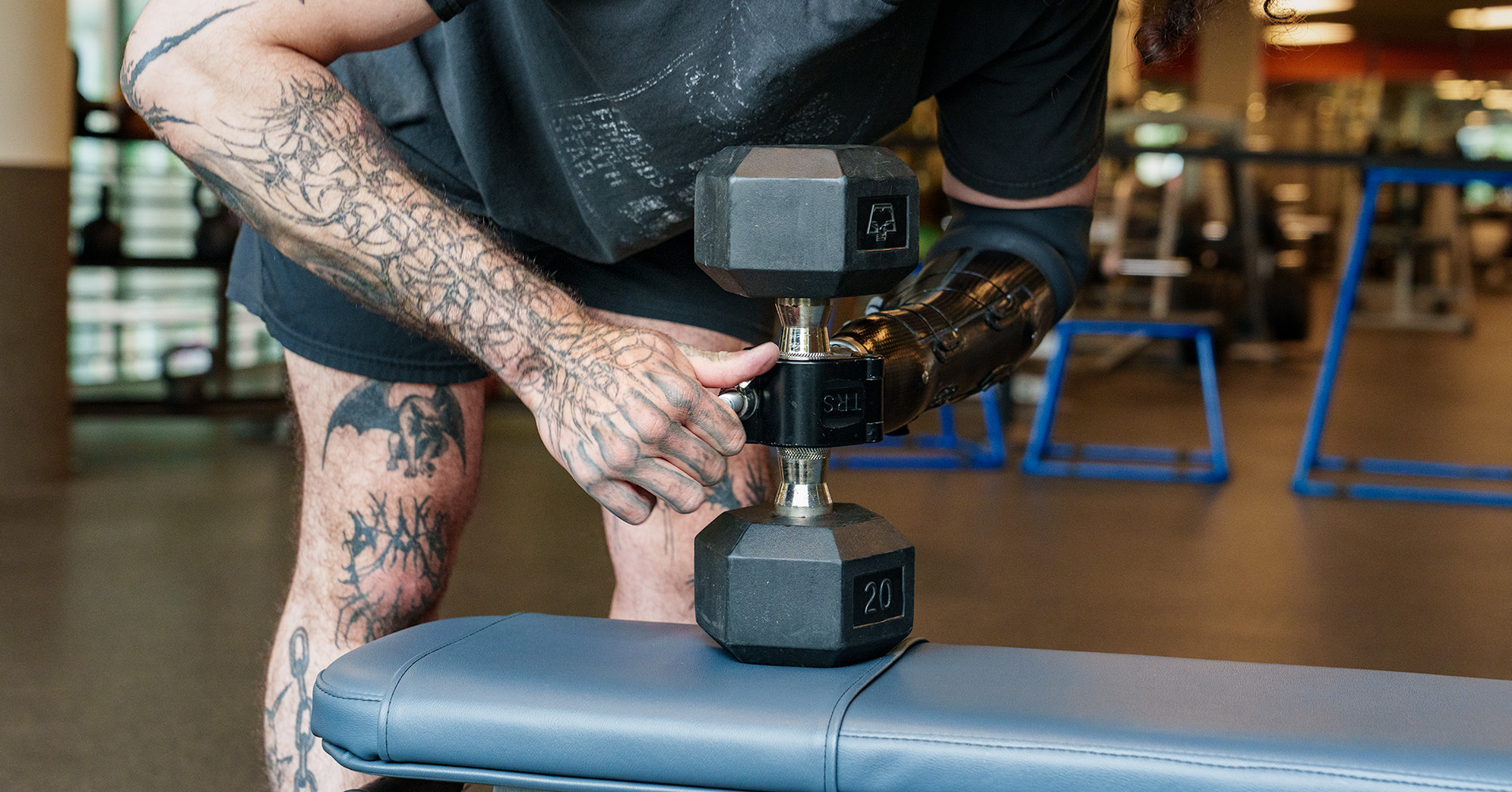
Arm Dynamics patient Isaiah screwing his activity-specific prosthesis into place so he can lift weights.

“My socket is really soft, really cushion-y,” our patient Isaiah (prosthesis pictured above), who has a below elbow amputation, told us. “When I’m wearing my prosthesis to work out, there’s no slipping – it feels solid.” When Isaiah wears his activity-specific prosthesis, it has a custom injection molded silicone liner and custom silicone socket. He can change out the terminal devices to be his Black Iron Master Trainer or passive hook for weightlifting, and he also has a Shroom Tumbler for pushups and the like. Isaiah is able to use his prosthesis without a harness to keep it on thanks to the BOA system, which he also uses on his myoelectric prosthesis frame. “I visited Arm Dynamics before I went anywhere else and I watched a video of a guy who was missing a shoulder, but he was still able to do pullups and things. That was one of my goals, I wanted to get back to the gym so bad. But then my workers’ comp sent me to a different prosthetic care place and when I asked them about being able to do pullups, they told me that was impossible. I knew that was BS. So when I did finally get to go to Arm Dynamics and become a patient, I told my prosthetist about the other place, and he just kind of chuckled and said that he would make it happen, that I would get back to the gym. It didn’t hit me until I was actually back there working out, just how weak that side was. It was so great to go back.”

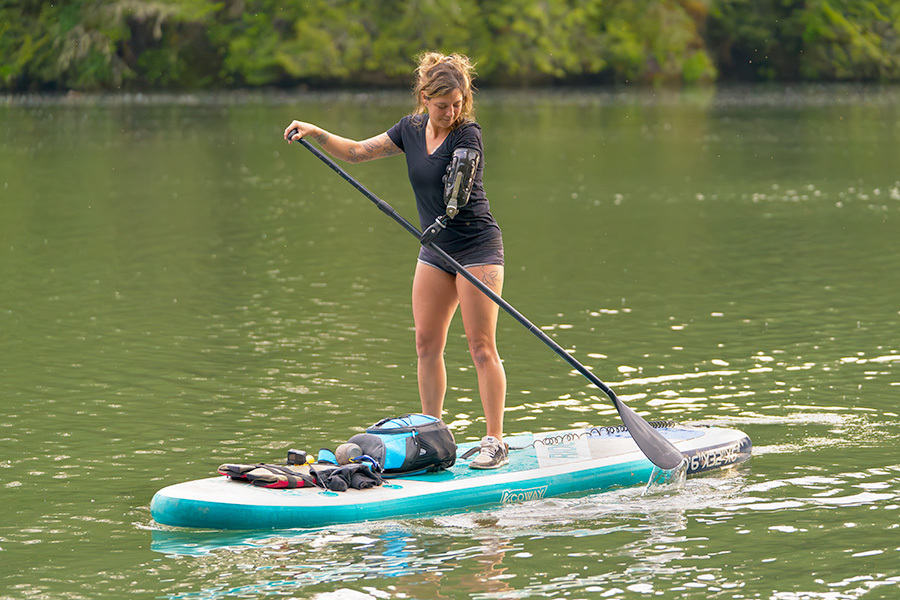
Our patient Wendi (pictured below) is also a gym rat. Wendi’s prosthesis is unique: she had become so used to having a short arm in the years after her amputation but before being fit with a prosthesis that she very specifically didn’t want a full-length arm. So we fit her with a terminal device directly connected to her prosthetic elbow. It works for her! Wendi uses the same prosthesis all day – at work, at home and at the gym – and she uses a silicone socket. When she’s at the gym, she might use her V2P, her Multi-D or her Shroom Tumbler terminal devices. “I spend three days in the gym every week, at least. I do anything from planks, to cable pulls, dumbbell squats … the list can go on … headstands – all of that kind of stuff. My prosthesis was made specific to me,” Wendi told us. “I put my prosthesis on first thing in the morning, and I take it off at the end of the day. It never bothers me. There is never any pain.”

Arm Dynamics patient Wendi uses her activity-specific prosthesis while paddleboarding.

Want to check out other patients who work out using a silicone socket? Watch Max and Xavier’s videos on their patient profile pages.

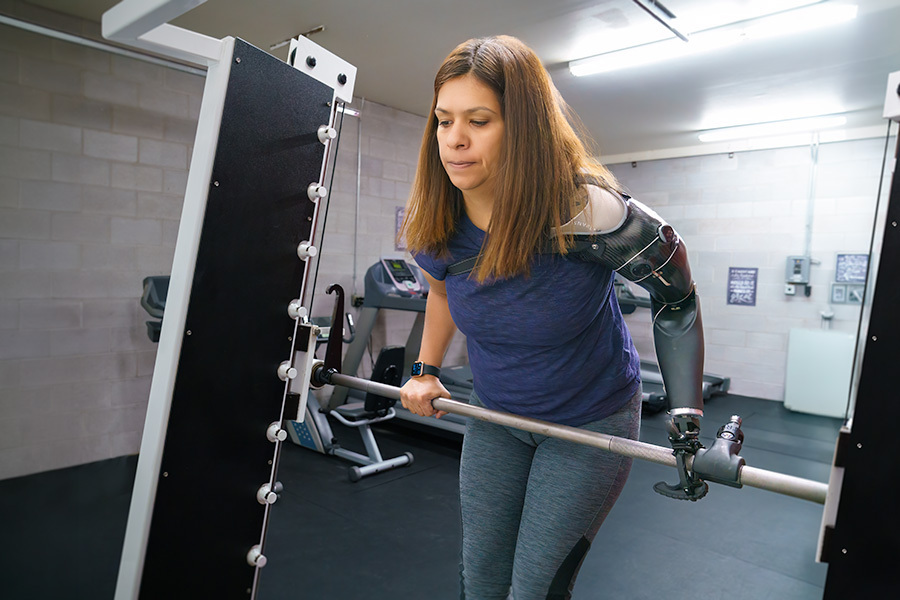
Do all our patients use a silicone socket for their activity-specific prostheses? Nope! We use whatever works best for our patients. For instance, our patient Claudia (pictured below), who has an above elbow amputation, uses a silicone socket with her myoelectric devices, but she and her prosthetist decided that a thermoplastic liner insert would work best for her activity-specific prosthesis, which she uses each morning at the gym. For our patients, it’s not just about what type of material the socket is. Our Dallas center prosthetist, Rob: “The physical design of the socket itself – the contouring, the removal of plastic or silicone in certain areas or pressure placed in others – that’s definitely an art within the art of creating sockets. In my experience, so few other prosthetists outside of Arm Dynamics really focus on the anatomical design of the prosthetic socket, which is disheartening, as this is the true foundation of the prosthesis regardless of prosthetic option or components utilized on the prosthesis. It took me many years to perfect the approach I have for various levels of patients, and it still can be challenging as every patient is different than the next.”

Arm Dynamics patient Claudia using her activity-specific upper limb prosthesis while lifting weights at the gym.

Silicone has many great qualities, and we love it when a patient wears their prosthesis to the gym and is able to do their workout without any pain or slipping or a lot of sweat buildup. We know that it’s not just about getting back to a routine, but about taking control of how their body looks and feeling good, both mentally and physically. Anything we can do to help our patients get where they want to be – we’re on board.

If you or someone you know is interested in learning more about the holistic prosthetic care we offer, from the creation of a prosthesis to our occupational therapists teaching our patients how to use their device, please contact us. If you’d like to leave a comment regarding this article, please do so below.

Subscribe!

No Comments Yet

Let us know what you think