

Life teaches all of us lessons as we go. The lessons our patients have had sometimes come as a surprise, both good and bad. In our interviews with patients over the years, they’ve told us about many things they’ve learned and how it’s shaping them as they grow and move forward.

Here’s the number one piece of advice we hear from upper limb amputees: be patient. Which is to say, they have learned to be patient whether they want to or not. Makes sense! There are so many things that people have to relearn entirely after an amputation, especially if that amputation has affected their dominant hand. There is no way to get through the aftermath of an amputation without getting frustrated. But, with time and patience, learning how to use their prosthesis to accomplish their goals at home and at work is doable. Don’t believe us? Just ask our patients Gerry, Angie or Hugo.

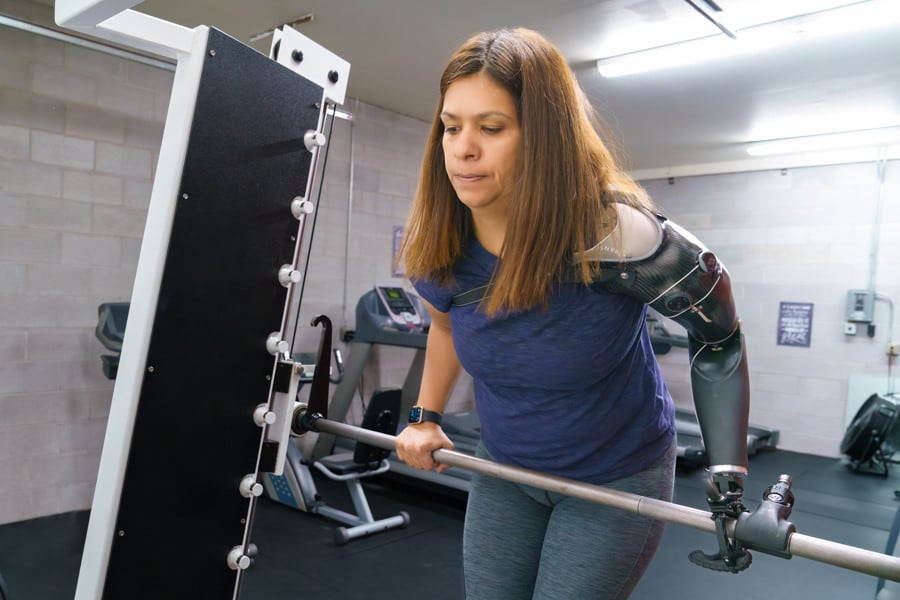
Some people learn just how valuable their mind and their life experience are – not just their ability to perform physical labor. Our patient Claudia (shown below) works at a commercial onion farm. During an on-the-job inspection, she was injured and now has an above elbow amputation. She was eager to get back to work, and when she was able, her supervisors told her, as Claudia told us, “We'll take you back in any capacity. Your mind is worth more than any labor you could do.” This helped Claudia change how she had been thinking in the months after her amputation. Claudia: “I had to reshape my thinking into saying, ‘You’re not a lesser person because you have one arm. You are useful in other ways.’ I think that was one of the biggest things I had to learn.”

Claudia Castellanos working out

Many of our patients discovered just how much their spouses, siblings, parents, children, family, church congregations and communities care about them and want them to thrive. When we interview our patients and ask them about their support system, they always sound so in awe of every way they received care following their amputation. From our patient Gerry, about his wife: “Denice has been a trooper. I tell everybody, I can’t imagine what she’s been through, mentally and emotionally. She’s still with me after all of this, and for anyone to stick with someone through something like this, that is a testament to how much they love you.” But it takes a village to help someone recover from an amputation. Our patient John and his wife Deb were supported by their church’s former Sunday school teacher. Deb told us: “Ed, who we dearly love — he’s retired now. He would come in and check on John a couple of times a week, just to talk. They used to meet at a restaurant and play chess. Ed is now in his 80’s, but when they would go to the restaurant, John would call me and say, ‘Hey, I’m here with Ed.’ And Ed would tell me ‘I’m gonna kick his butt, Deborah,’ and I’d say, 'No, he’s gonna kick your butt, Ed.’ And we would just laugh and laugh.” For patients who, prior to their injury had trouble asking for or accepting help – well, that turns around pretty quickly.

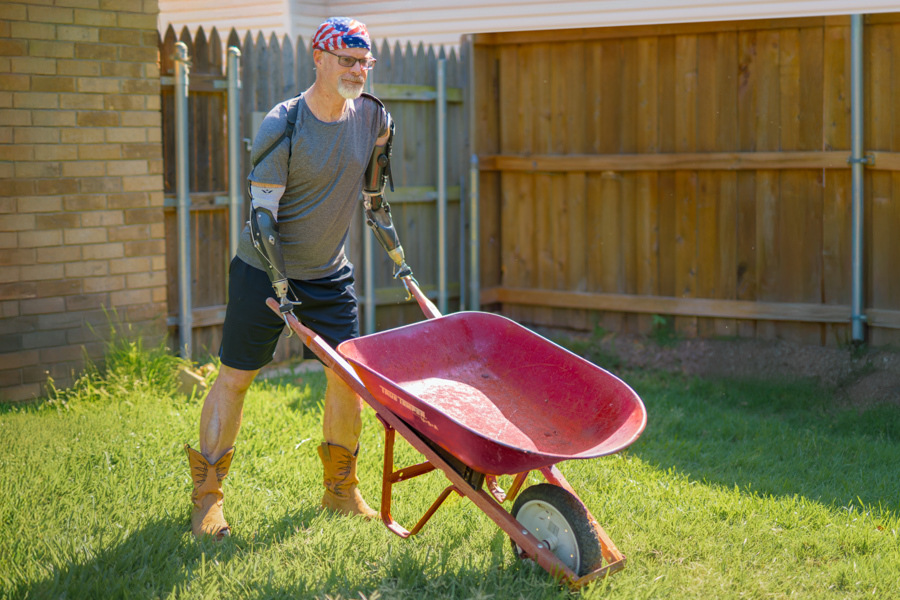
Lastly, many of our patients have learned just how strong they are. What they are capable of. What they can endure when they must. For some of our patients, they are happy to have survived the accident that caused their limb loss even if it means living with an amputation. But while surviving is impressive, it’s nothing like the gauntlet that is the rest of their lives. They have to relearn many things. The complaint is often heard that children don’t have enough patience, but they do have the patience to learn things when it’s important to them – just watch any kid who is trying to beat a video game or make a basket in basketball. But to then ask an adult to relearn how to dress themselves, feed themselves, drive a car – it’s a big ask! But so many of our patients do all that. Our patient JJ (pictured below), who lost part of both arms in an electrical accident, likes to say: “Don’t give up.”

JJ Listing

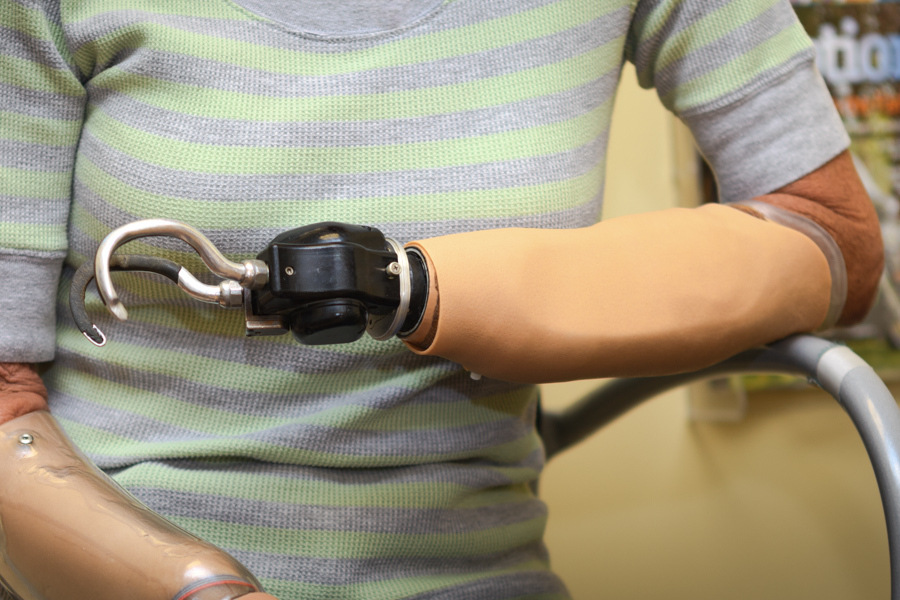
In no way do we mean to imply that having an amputation or a limb difference is all roses. It’s tough living in a world that is built for people with two hands and five fingers on each hand! But it is doable, and the people who are doing it are, in some ways, stronger for it. Especially when they’re fit with a prosthesis that is functional, comfortable and looks good. That’s where we come in. Our prosthetists are upper limb specialists, and they make their patient’s goals their own goals. Our occupational therapists teach patients how to use those devices and make both big and small changes in their routines to maximize efficiency.

Our clinical team enjoys meeting new potential patients and negotiating the waters of challenging limb difference levels and their fitting needs. If you, or someone you know, would like to learn more about the holistic prosthetic care and support we offer, please contact us. You are welcome to leave a comment below, if you would like.

Subscribe!

No Comments Yet

Let us know what you think