



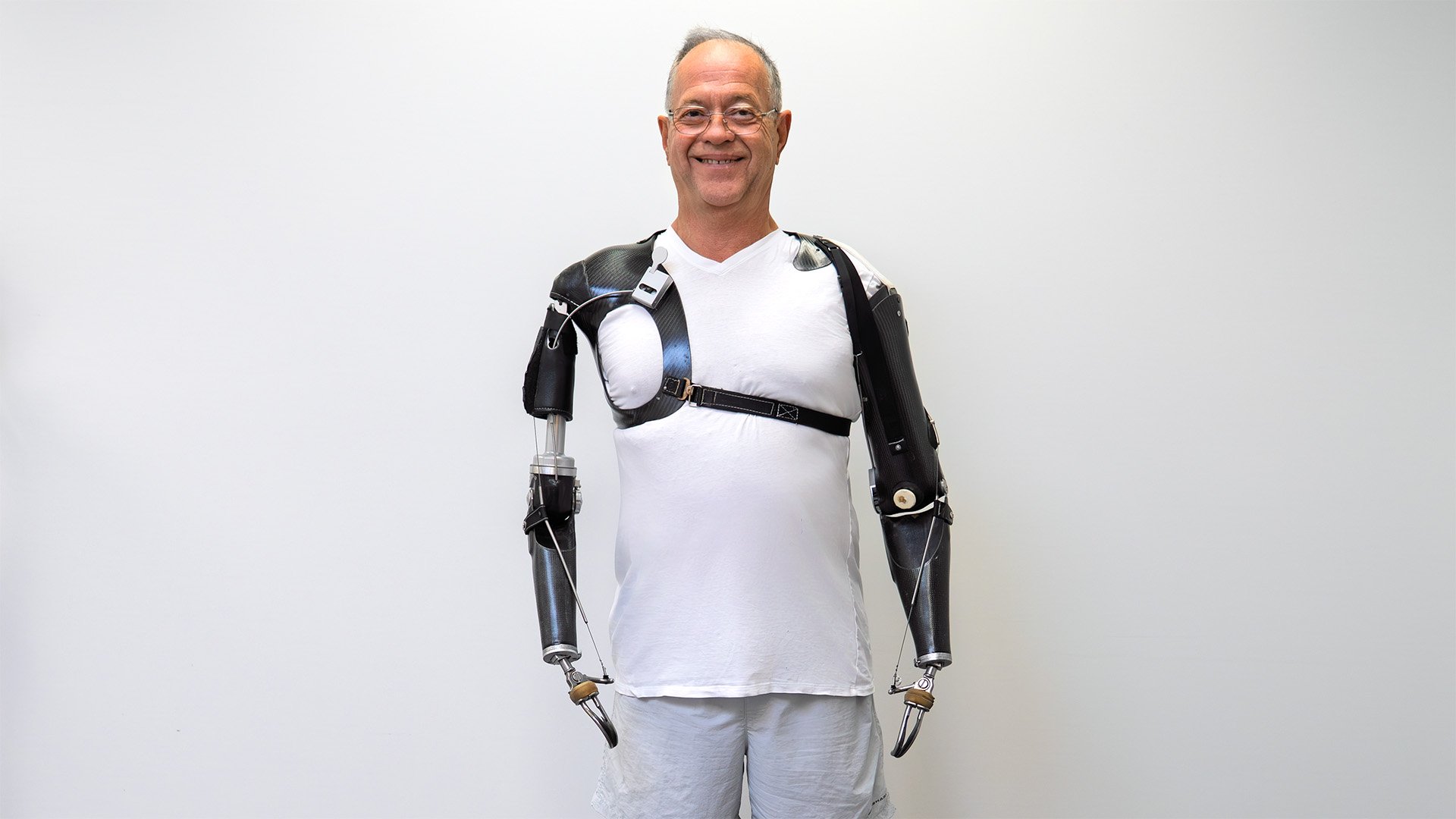
Our patient Doug has been wearing bilateral prosthetic devices for over fifty years, though he only became our patient within the last four years. Out of all the prostheses he’s worn over the years, which has he found the most comfortable? The ones we most recently fit him with.

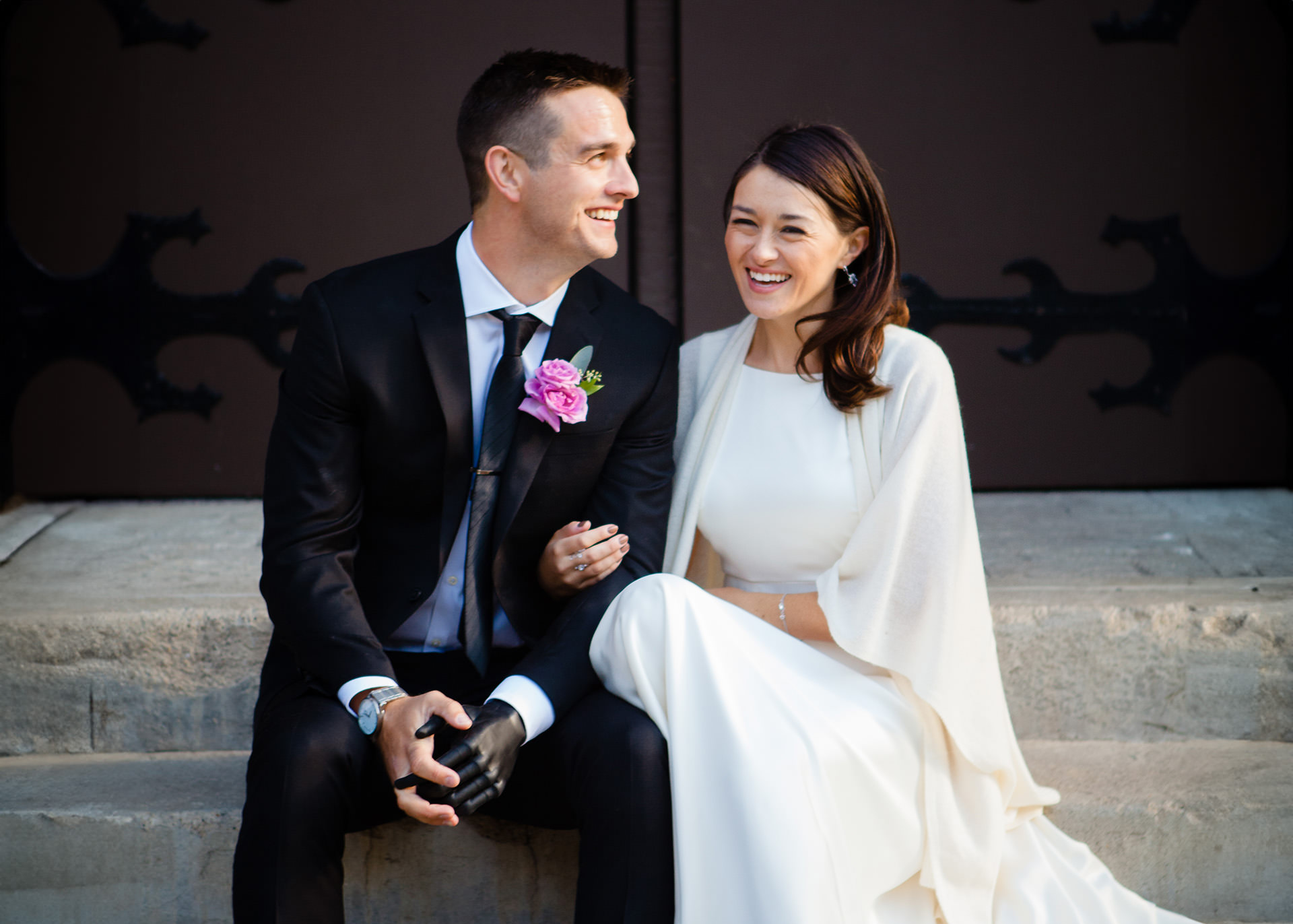
Our patient Tom has a wrist disarticulation amputation due to a wakeboarding accident when he was 17. He was initially fit with a single-motor myoelectric hand but now wears a TASKA hand without a harness.

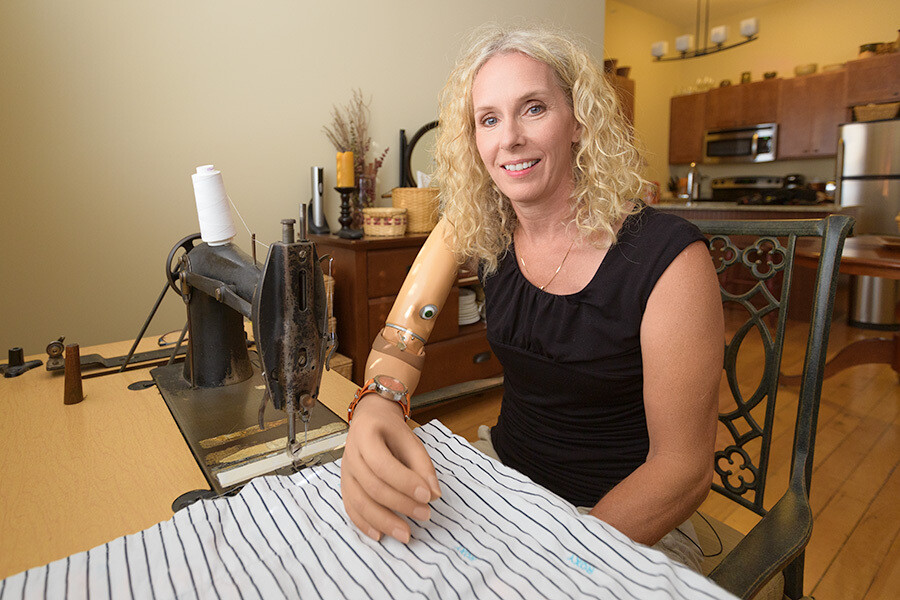
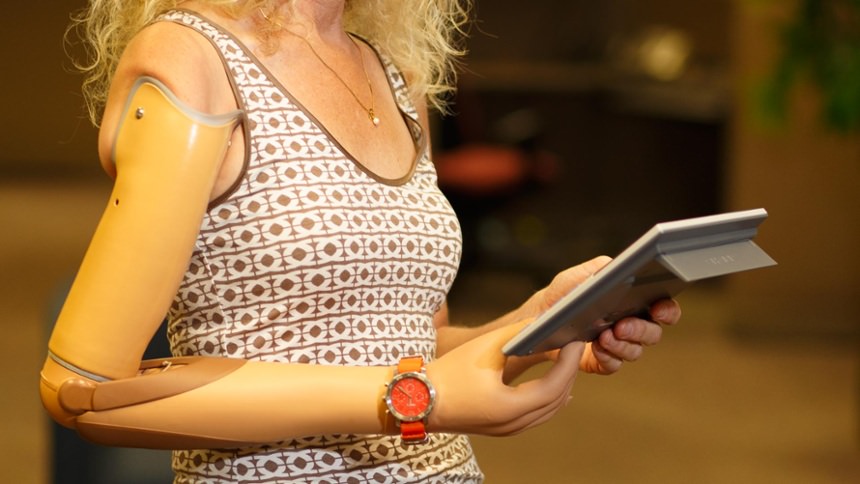
Our patient Sherri has a congenital limb difference that is above the elbow. She wore a harness for much of her life and eventually found she could not continue with it due to overuse symptoms. Now she is able to wear a single-motor myoelectric prosthesis, without a harness.

What do all these patients have in common? They all wear suction sockets prosthetic sockets that are held on or suspended by being airtight.

“It’s a gift to me,” Doug told our team, “that the first thing that I had happen at Arm Dynamics was that they got me into my first suction socket. So now I’m able to use my arm better than I’d been using it over the last five or six years before that. All of a sudden, my aches and pains in my shoulder are going away because now I’m using my arm anatomically correctly.”

Because Doug (pictured below) uses body-powered devices, he needs to wear a harness to capture his shoulder motion so he can flex and extend his elbows, as well as open and close the body-powered hooks. The suction socket on his left side makes him feel more balanced because the majority of the suspension is handled by the socket and is no longer just hanging on the straps of the harness.

Dougs PX-2

Doug’s prosthetist is Mac Lang at our Portland, OR, center: “With Doug’s old prosthesis, he kind of had to corkscrew his residual limb into the socket – similar to putting your thumb in a Coke bottle. It worked, but it’s not a very positive fit once he gets past the tight part. Also, while it’s not super difficult to get in, it’s more difficult to get out. Since Doug doesn’t have his other arm, it’s that much more difficult. So, the stability and convenience of the suction socket make a huge difference for him in terms of both comfort and function.”

When Tom is wearing his body-powered device, he needs to wear a harness so he can open and close the hook with his back and shoulders. When he wears his multi-articulating myoelectric hand, he doesn’t need a harness. Tom’s wrist disarticulation amputation is through the wrist joint, which leaves the end of the two forearm bones. The two bony bumps on the sides of the wrist are styloids, and when those are present, it creates a larger contour at the end of the arm. Tom’s prosthetist is also Mac, and he told us, “That contour allows us to mold the inner socket in such a way that he can push past the flexible silicone socket that is intimately fit to his residual limb. This, along with the silicone on top, slightly compresses his tissues, creating the airtight or suction fit that is the main mode of suspension.”

Another huge benefit that both Tom (pictured below) and Doug enjoy is using their arm motion to rotate the socket and frame. It attaches below the higher joint – so when they rotate their arm, their arm doesn’t just rotate freely inside their socket, it actually rotates their device. This is a big functional advantage!

Tom Seibert and his bride at their wedding

The suction socket is what allows Sherri (pictured below) to continue wearing her prosthesis with comfort. “What’s really important to me is the fit of the socket without straps – the complete suction fit.” Sherri usually wears her single-motor myoelectric hand and a Dynamic Arm. This makes for a pretty heavy prosthesis, but she’d rather deal with the weight than wear a harness. “Sometimes the arm gets heavy and I have to switch to a different arm. But I find it so helpful to wear a prosthesis. I know not everyone who has a limb difference wears one, but I can’t understand why. It’s so helpful.”

Custom Socket with Utah arm and Sensorhand

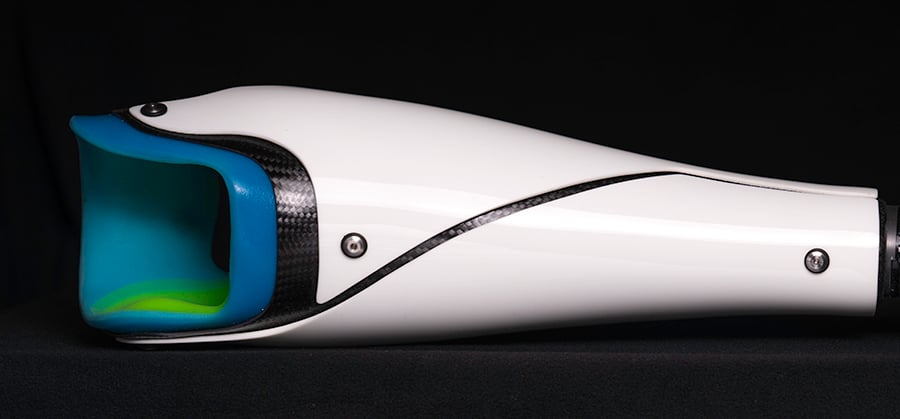
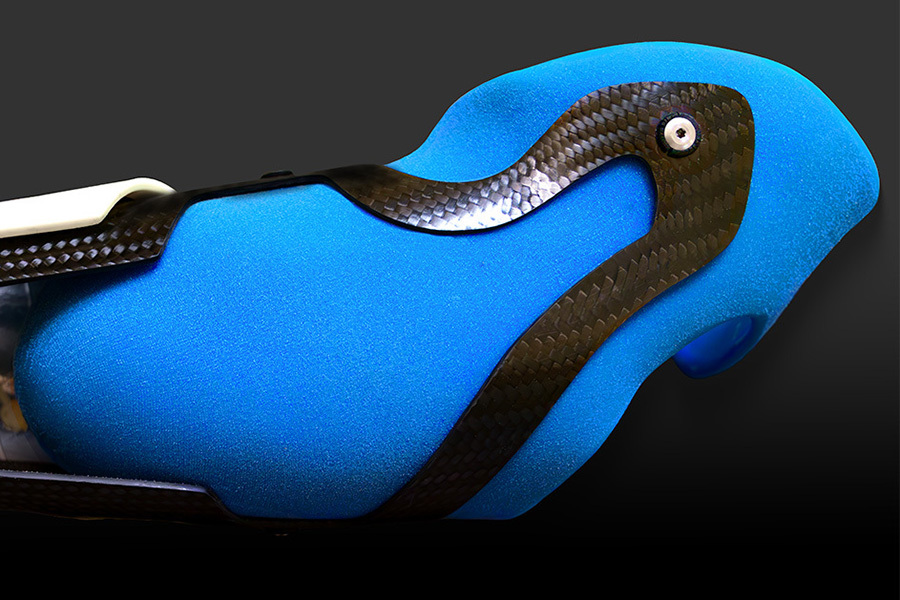
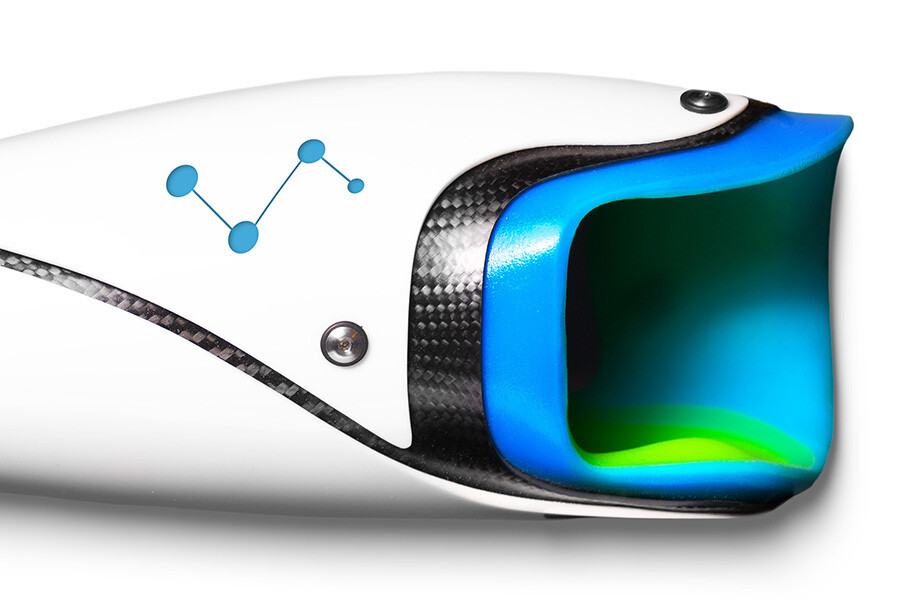
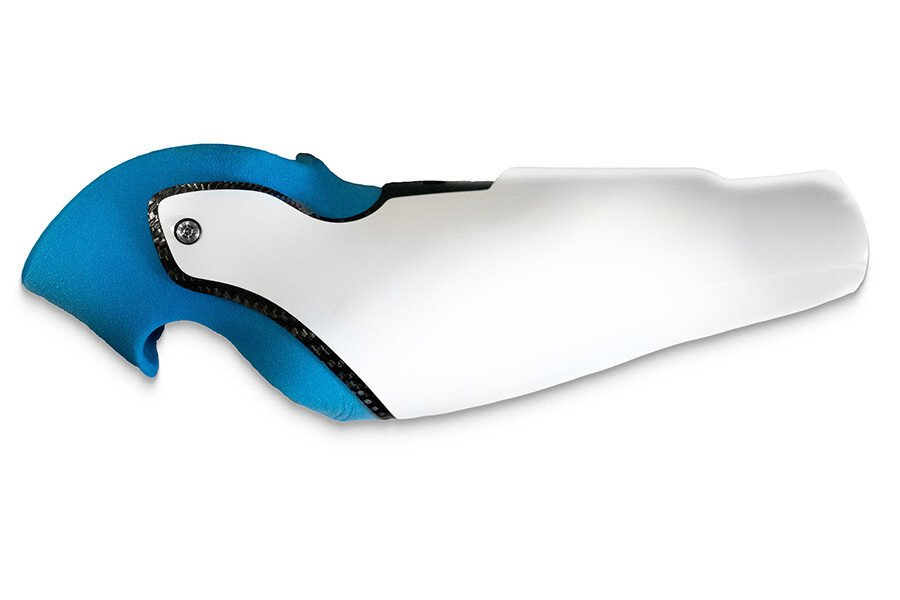
Now, as Mac says: “Not all suction sockets are silicone, and not all silicone sockets are suction.” Silicone is highly elastic, hypoallergenic, and molds to the skin for excellent cushioning. This allows our prosthetists and technicians to create unique designs that are only achievable because of
those properties.

There are other ways of using suction as a means of suspension, but the magic really happens when silicone and suction are combined!

SiliconeSocketWhiteFrameDSC08238

Well-fitting prostheses are critical to success, but equally helpful are our clinical therapy specialists who teach our patients how to use their prostheses and how to use good body-mechanics when wearing their device.

If you’d like to learn more about our holistic prosthetic care, please contact us. If you’d like to comment on this article, please do so below.

Subscribe!

No Comments Yet

Let us know what you think