
We have done several posts about the type of prostheses that can handle heavy-duty activities, from welding to weightlifting. But what about activities on the other side of the spectrum? Many of our patients are interested in resuming or beginning some activities that require fine motor skills. Just recently, we spoke with a patient who wants to use their prostheses to operate power tools, which is a heavy-duty activity, and to open doors, which is a fine motor skill. What can people with various goals do with their prosthetic devices? To provide some examples of fine motor skill activities, we’re using an article from the Cleveland Clinic.

Writing

Some patients who lose all or part of their dominant hand, may be able to learn to write with their non-dominant hand. But other patients choose to learn to write using their prosthesis, like Ryan:

Using Scissors

For unilateral amputees, when cutting with scissors, the best bet is going to be using your prosthesis to stabilize the paper or item you’re cutting, and use your sound hand to move the scissors. You can see our patient Autumn taking this approach to using scissors, along with her other fine motor skills, in this patient profile video:

Folding Clothes

Our patient, Karen, who has a congenital limb difference, told us she uses her i-Limb to fold her laundry. “When I want to do it quickly, I won’t use my device. I’m faster without it. But when I take my time and use the device, my shoulder on my affected side won’t hurt the next day. And my wrist on my other side won’t hurt. So, it’s not about how fast can I do this task, but about how I do this task and not hurt afterward.”

For people with an amputation who are not used to folding laundry one-handed, it is faster with a prosthesis, which our patient Aaron comments on in his video:

Typing

And let’s not forget texting and using your phone! Check out our full article featuring typing and texting with an upper limb prosthesis.

In Ryan’s video mentioned above, you can also watch him type with his partial finger prosthesis.

Clothing: Zippers, Buttons, and Tying Shoes

Zippers, while tricky, can be started and zipped with a prosthesis, or in Jason’s case, two prostheses:

Buttons can elude even the most adept two-handed people. For this particular task, may we introduce you to the Pocket Dresser:

Many different types of prostheses can be helpful for tying shoes. There are also more shoes available now that don’t require any tying or even any wrestling to get the shoe on like the EasyOn by Nike or the Hands Free Slip-Ins by Sketchers.

In Maria’s video, you can see her use her V2P terminal device to tie her shoes and to pick up tiny items, pour a sugar packet, and write her name.

We have two articles about adaptive clothing and hacks: Clothing Options for People with an Upper Limb Difference and Adaptive Clothing: Tips and Tricks for People with a Bilateral Upper Limb Difference.

Turning a Doorknob

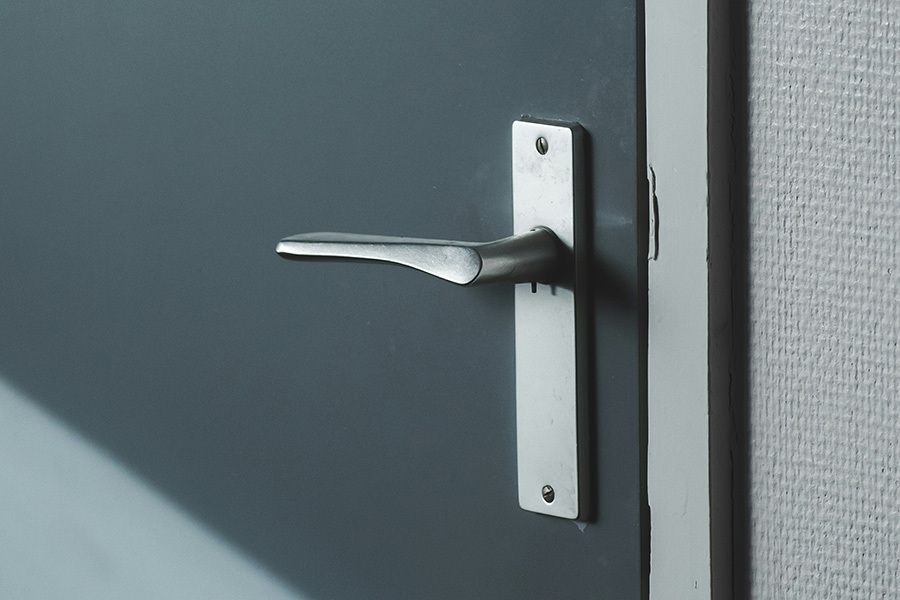
Twisting a doorknob can be tricky with some prostheses, like a multi-articulating hand, because it’s not so much the fingers grasping but the wrist movement. While there’s no way to avoid doorknobs all the time, we recommend replacing the doorknobs in your home, if possible, with levers, like the one below. Then it’s easier to hold something with your sound hand and open the door with your prosthesis.

Door-Listing

Eating with Utensils

Not a problem – watch Madelynn use her Point Designs Point Partial Digit to use a fork and knife in her video:

Additionally, we’ll do you one better – how about cooking the whole meal? Check out our patient Yanick using his partial hand prosthesis to cut veggies and use a spatula.

Playing Video Games

For our full article about playing video games using a prosthesis or adaptive devices, check out our article Video Gaming with a Limb Difference.

Playing an Instrument

Another one we have a full article about! Read Rock On! Being a Musician with a Limb Difference for more information, and check out Brian’s video where he plays the guitar with the help of a partial hand prosthesis:

There are so many other fine motor skills that people use for other activities, like making jewelry (which you can see our patient Sherri do in her patient profile video) or brushing teeth (the secret is to build up the handle of the toothbrush with foam grip tubing so nearly any prosthesis can hold it steady). If there is a fine motor skill that you are struggling with, our clinical therapy specialists are here to help you find a solution.

If you are interested in learning more about the holistic prosthetic care we offer, please contact us. We don't just provide the prosthesis you need to do your daily tasks. Our Arm Dynamics team also teaches you how to use the prosthesis and listens to your thoughts about how things could be better.

If you have a comment, please leave it below.

Subscribe!

No Comments Yet

Let us know what you think