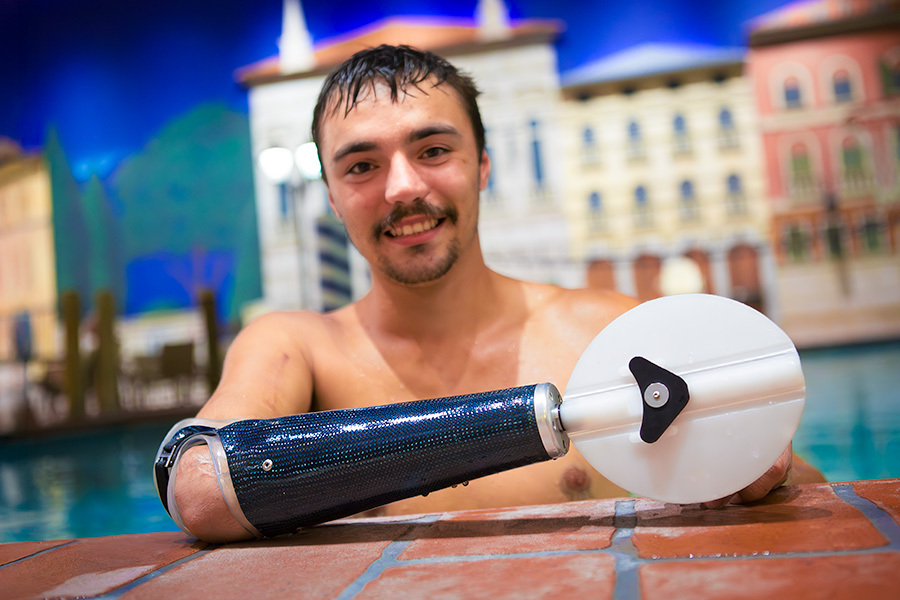
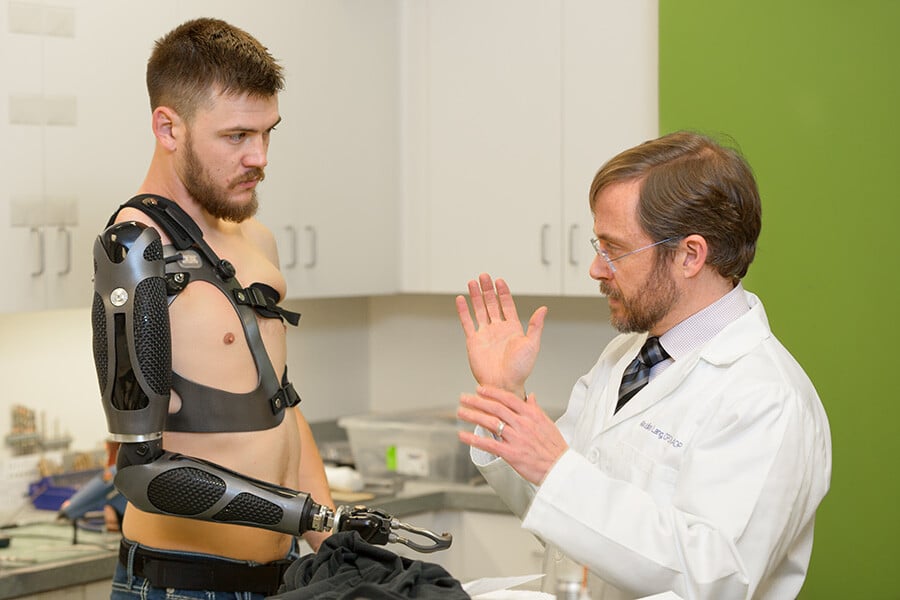
People with upper and lower limb loss are both fitted by prosthetists with devices that help them function in a four-limb world. Still, it’s essential to understand that upper and lower limb amputees require different approaches to their prosthetic care.

With lower limb prostheses, the goal is to be mobile without pain, and possibly to run or do other strenuous activities. People who want to be physically active usually require an activity-specific device and overall good health. But for people with an upper limb difference, the goals are all over the place. Some of our patients need to get back to work as soon as possible for their mental well-being and sense of purpose, or to continue supporting themselves and their families. Some of our patients would like to ease overuse symptoms. Still others just want a device that looks like their finger, hand, or arm. Passive silicone restorations may not be as “functional” as other devices, but they offer the lifelike appearance of a natural limb, helping the person to blend in - they are functional in that they are performing the job the person wants. These devices also provide a surface for stabilizing objects and lifting larger items.

Our patients have a range of skills. Some are “newbies” who are just starting out and learning how their device can help with their daily tasks. We have experienced prostheses users who’ve had their device for 10 years or more. We also have people who are casual users – they find their device helpful sometimes, but they’re not in a rush to become an “expert.” Additionally, there are “super users” – patients who use their prosthesis nearly all day, every day, out of necessity or to push themselves to the limit.

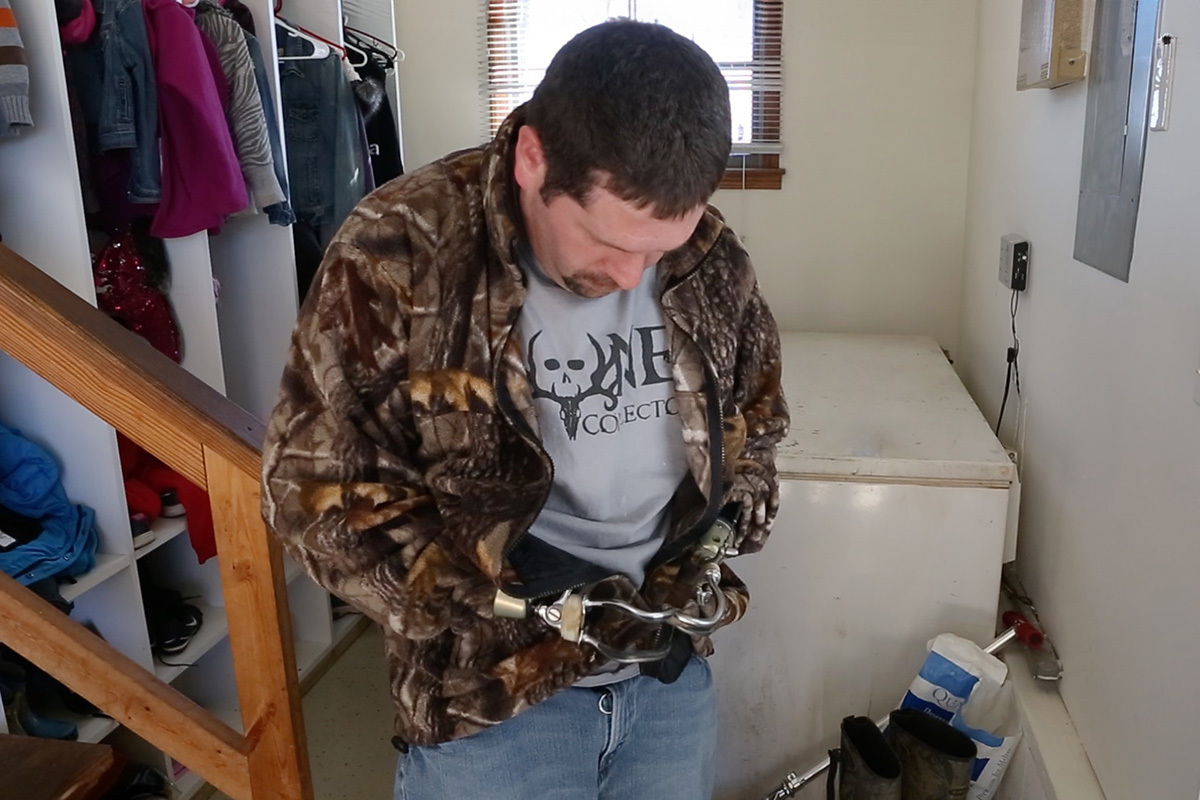
Jason Zipping
Our patient Jason is a "super user" - shown here zipping up his jacket.

Learning about what our patients want from their devices is a process for our clinical teams as well, and what our patients want may change with time – not just with their prostheses, but also what they want from their life.

For instance, some people with a limb difference may not worry much about doing their hair. Is it clean, is it brushed? Great, let’s go. For many people with a congenital limb difference, if they didn’t grow up with a prosthesis, they may not think that a prosthesis could help them with a task like hair curling. Or, for someone with an acquired amputation, hair curling may be the last thing on their mind, when making dinner is far more pressing. But with time, guidance from an Arm Dynamics occupational therapist, and a few YouTube videos, many activities are possible.

Or maybe there are tasks where a person just hasn’t thought about using their prosthesis to help them. When we spoke with our patient Karen this summer, she told us about how she uses her multi-articulating myoelectric hand to fold her laundry. Karen has a congenital limb difference, so over time, she’s become pretty efficient at folding her laundry without a device. The downside of using her device to fold laundry is that it takes longer than it does when she doesn’t use her prosthesis. But there’s a big upside to using her device. “When I take my time and use the device — my shoulder on my affected side won’t hurt the next day. And my wrist on my other side won’t hurt. So, it’s not about how fast can I do this task, but about how can I do this task and not hurt afterward.” While speaking with another patient later in the year, we mentioned this to them – both the slower pace of laundry folding and the lack of pain. “Oh!” they said, “I hadn’t thought to do that – I’m going to try it – I’ll just watch a show while I do it.” This patient often uses their device when out of the house and hasn’t incorporated it much for tasks inside the house – until now.

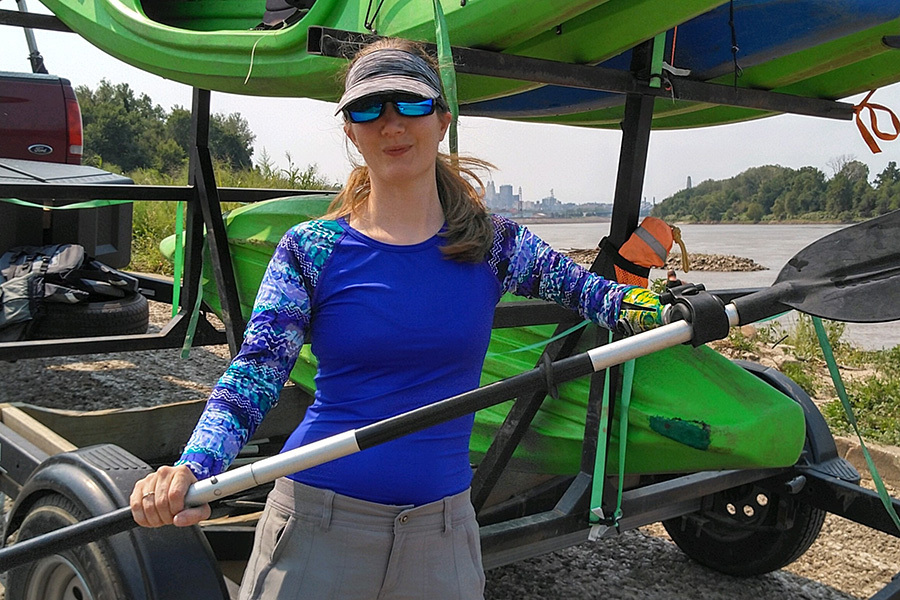
Karen-Listing
While laundry is necessary, Karen would rather be wearing her activity-specific device and kayaking.

One thing we often tell new patients is to learn to use their device by first doing something that brings them joy. Our occupational therapist at the Minneapolis center, Becky Park, has had success with this suggestion. “Focusing on a recreational goal allows the patient to develop functional skills with an enjoyable activity. These functional skills then can be transferred to work-related tasks and potentially improve their function with these tasks as well. This is a great way to improve functionality because the person is completing enjoyable tasks that they are highly motivated to perform.” But also, if possible, keep the enjoyable tasks and new challenges coming. Both Karen (mentioned above) and our patient Kiersten, had a multi-articulating myoelectric hand as their first prosthesis. But later, both were able to be fit with an activity-specific device that has allowed them to expand their exercise routines and outdoor activities.

With an upper limb prosthesis, you are never done learning because the possibilities of what you can do with your “hands” are endless. You may think you have mastered your prosthesis after a few years, but there’s more ahead. Our patient Chris, who has three years of prosthetic experience, spent some time at our Kansas City center with another patient, Gerry, who has 10 years of prosthetic experience, and is a bilateral amputee. Chris: “Meeting Gerry was very motivating for me! I felt that I had hit a wall with developing my prosthetic skills. Gerry amazed the daylights out of me. Watching him utilize his prostheses showed me that I have more to accomplish. He also reminded me that he has more years of practice, and he was once where I am today. Honestly, talking with Gerry was my favorite part of that visit."

This is why we’re so proud of our peer-to-peer support. Many of our patients meet casually, while at their center during their appointments, but for anyone who would like to meet with one of our Arm Dynamics patients, please contact us. We have so many individuals who would like to pay it forward by helping those who are just beginning, or in the middle of, their prosthetic journey.

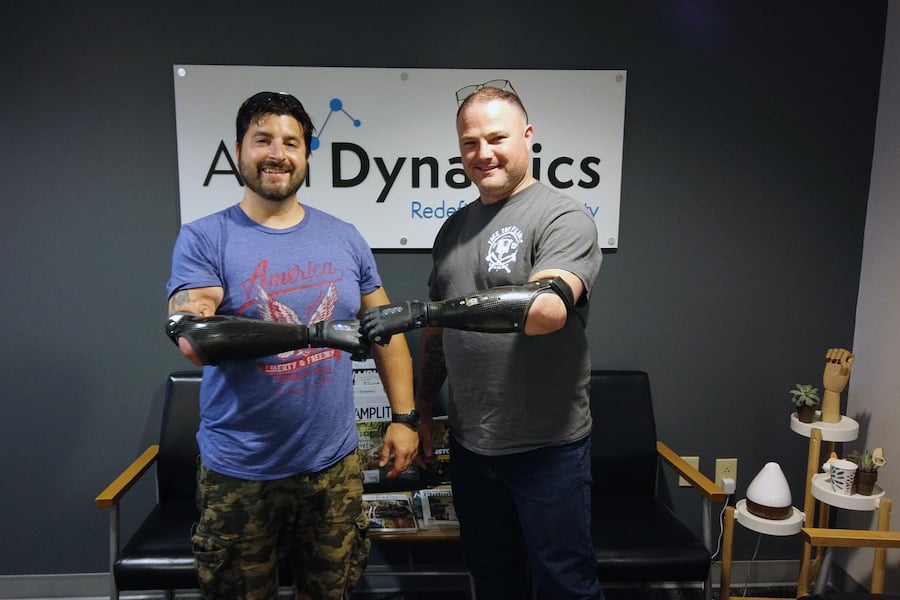
Peer Support Steve and Brian with TASKA copy-1
In this photo, Steve, on the left, had just received his TASKA hand and was able to meet with Brian, who had been wearing his for over a year.

Another key feature of our holistic prosthetic care is listening. By listening to our patients about what they love to do and how they want to do it, we’re able to fit them with devices that offer function, along with a customized appearance. If you are interested in learning more about this type of care, please contact us. If you would like to leave a comment below for us or for one of our patients, please do so below.

Subscribe!

No Comments Yet

Let us know what you think