
Life doesn’t stop so that people who've experienced limb loss or limb difference can learn how to use their prostheses. There are also common life transitions that everyone faces growing up, thinking in new ways, changing jobs, and getting older. One of the reasons our centers offer lifelong care and maintenance for our patients is because we recognize that our patients and their goals and needs are always changing.

There are so many different ways we support our patients through various transitions. For example, when our patients change careers, we are there to help them navigate this change with the one-on-one guidance of an Arm Dynamics occupational therapist to show them how to use their prosthesis and ways to modify their daily activities. Our patient Max, who has a congenital limb difference above his elbow, decided he wanted to be a personal trainer. He began working out a lot, without a prosthesis, and found his back pain increased to the point where it was unbearable. That pain was caused by overuse issues – he was trying to use his affected side but because he couldn’t use it ergonomically, he was straining his shoulder, back and his sound side. We were able to not only create a unique device to assist with musculoskeletal balance, but it also helped him achieve his goals as a personal trainer. You can see him talking about his experiences in his patient profile video:

Other people change careers after their amputation. For example, our patient Merlyna had an infection that caused her to lose all four of her limbs. After recovering and receiving prosthetic arms and legs, she initially went back to her job as an elementary school principal. Since then, she’s moved on to motivational speaking. So, we moved from supporting her in her work as a principal to supporting her needs for traveling and presenting. We wanted to set her up to be as independent as possible with her upper limb prostheses so she could accomplish her goals.

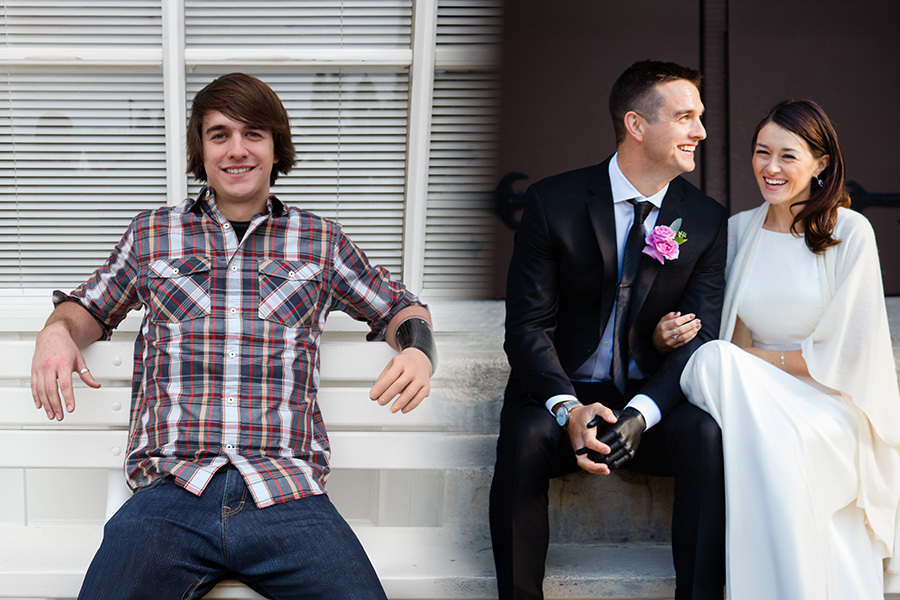
Our patient Tom was injured in a wakeboarding accident as a teenager. Once he was ready for a prosthesis, he was more interested in his device looking like a sound hand than he was in its functional capability. To that end, he chose a single-motor myoelectric hand. These types of devices provide function (they open and close and provide a standard grip) and look similar to a real hand. Several years later, as his needs and goals changed, he chose to embrace the robotic look of a multi-articulating myoelectric hand, which provides him with more function because of its increased grip options. He now really enjoys how his prosthesis looks and isn’t afraid to use it in public. It definitely helps with the two kids he and his wife Sarah have had since his amputation!

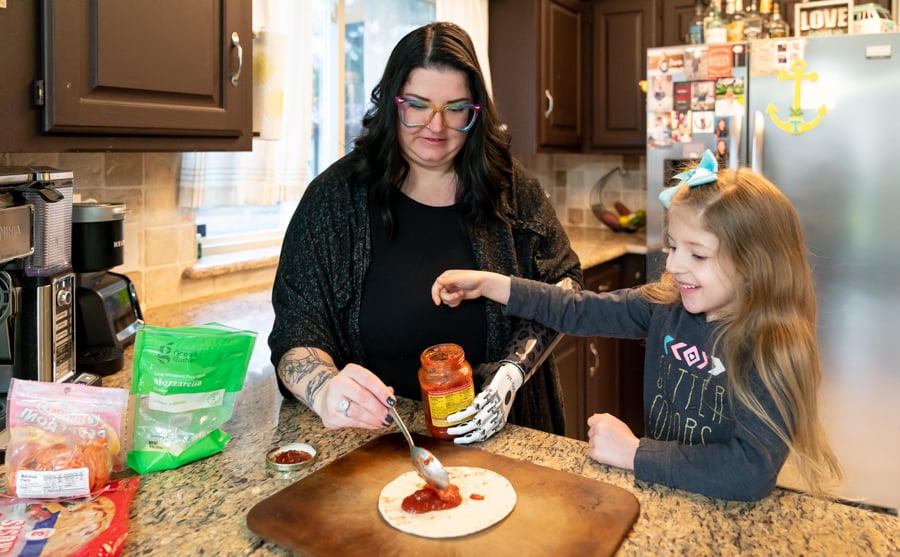
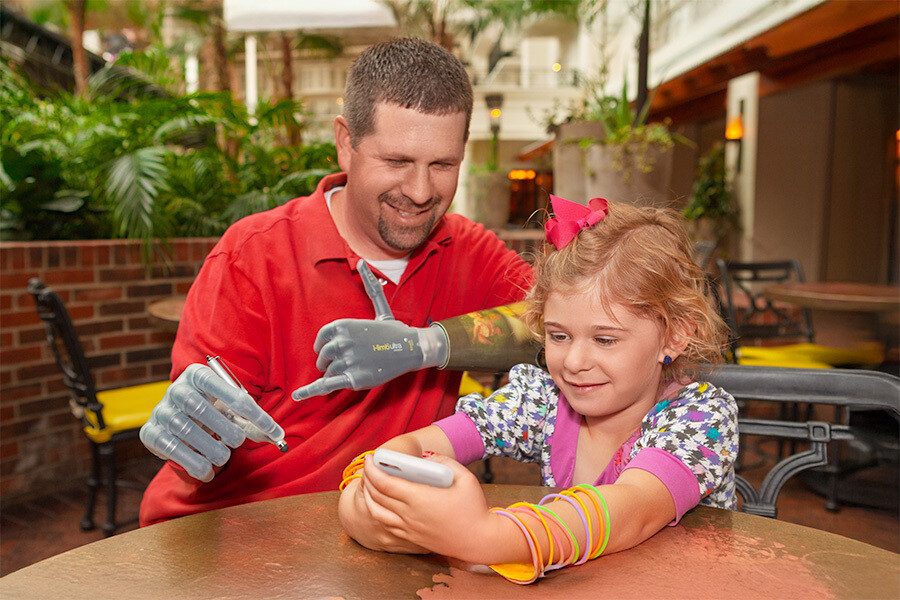
Mandie’s child was the reason she decided to get her prosthesis. Mandie has a congenital limb difference and had chosen not to wear a prosthesis. Because of this, she’d adapted to life without one. However, in becoming a parent, her needs changed. One day, driving with her toddler daughter in the car seat behind her, her daughter dropped a toy on the floor – out of the reach of Mandie’s sound arm. She thought to herself that perhaps a prosthesis would be of help in a case like this, and before she knew it our Dallas, TX, center was fitting her with a bebionic multi-articulating hand and myoelectric arm.

Mandie1DSC09772
Mandie and her daughter, who is no longer a toddler.

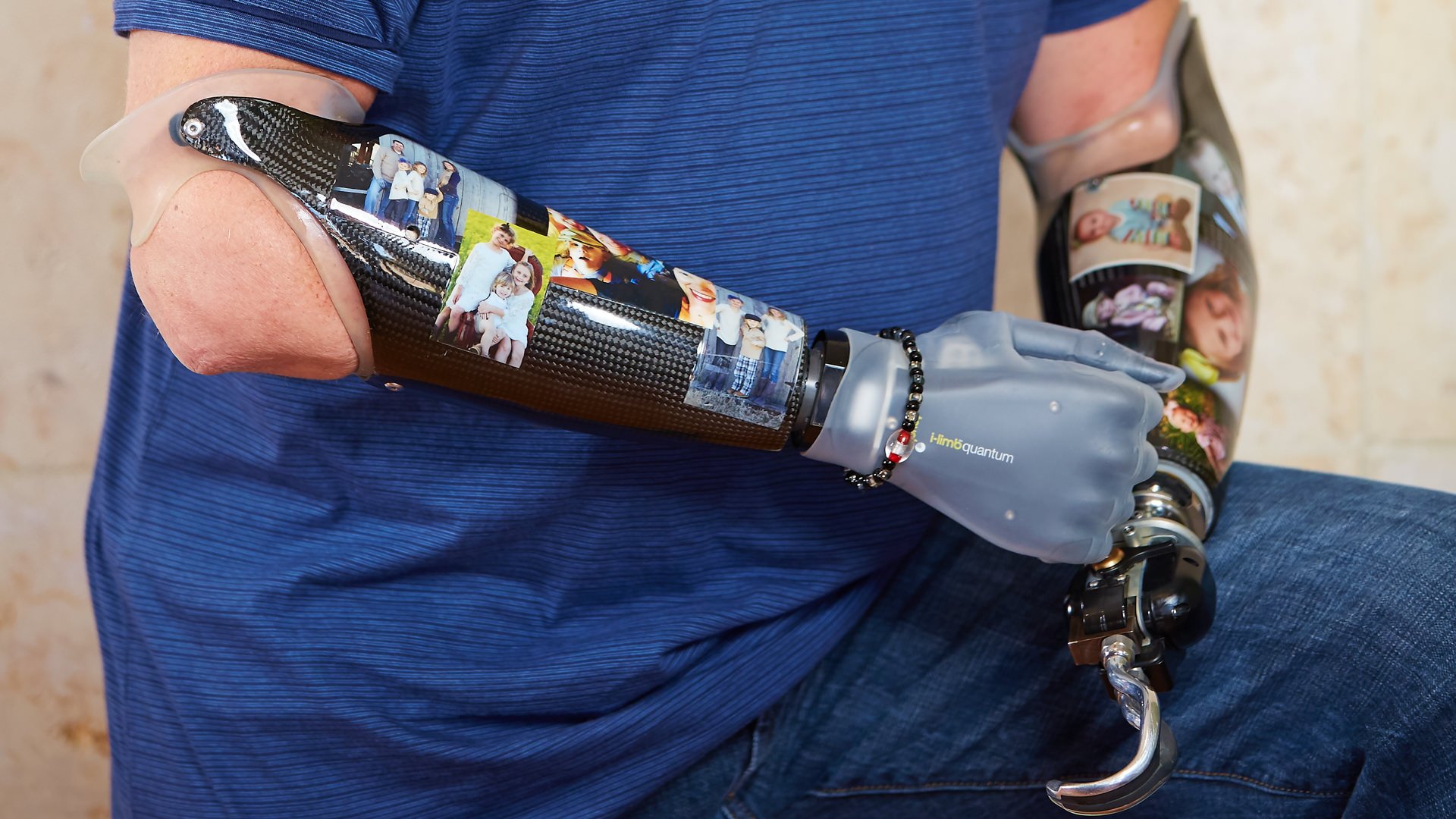
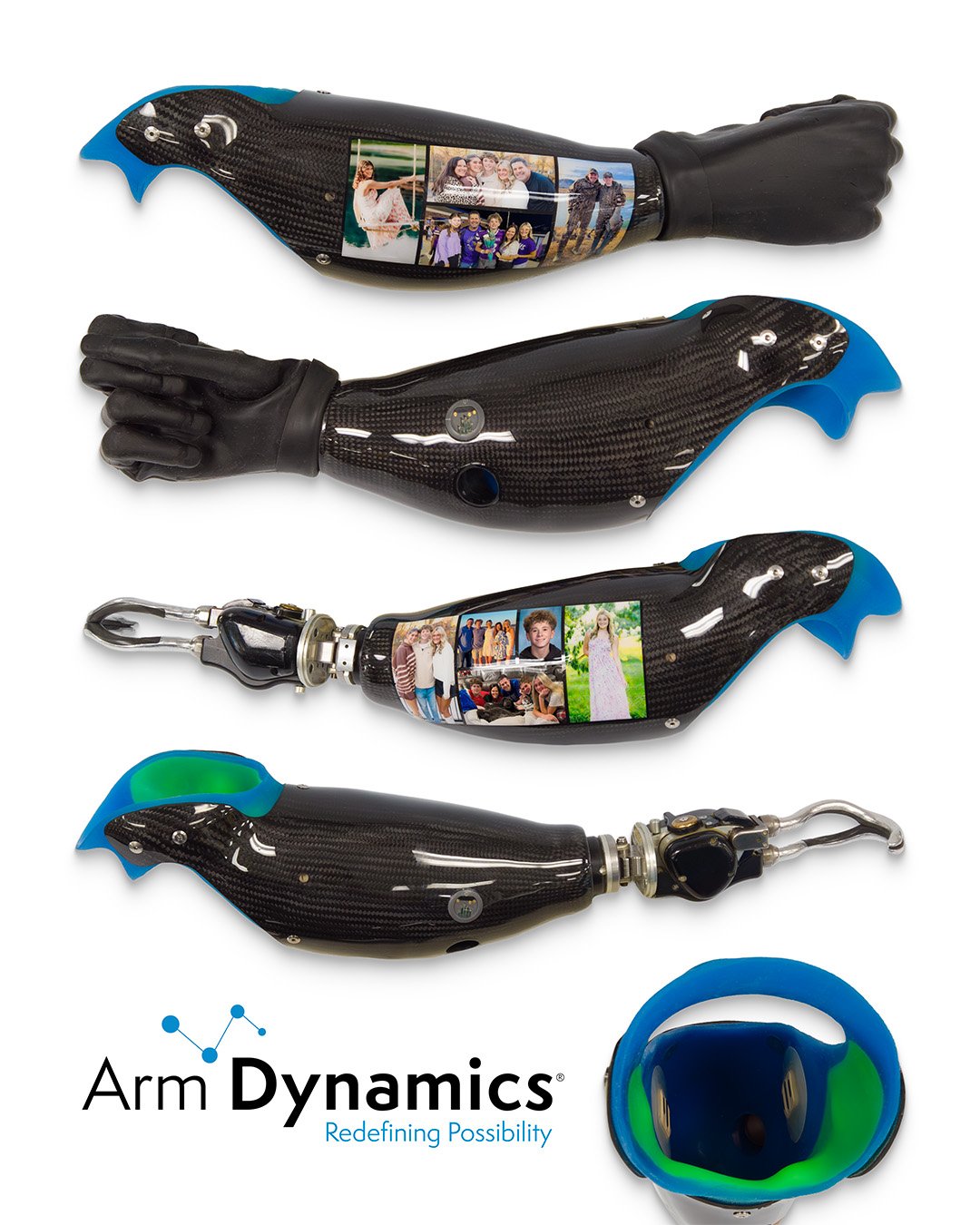
Speaking of kids, our patient Jason likes to show off pictures of his kids on his prosthetic sockets. Here are an early set of prostheses we made for Jason:

Jason Kogers silicone sockets with photos of his family embedded

But kids grow up! Jason’s children are now several years older. He’s still a proud papa, so when it was time for new frames, we updated them for Jason:

Jason Koger Family Photos Sockets

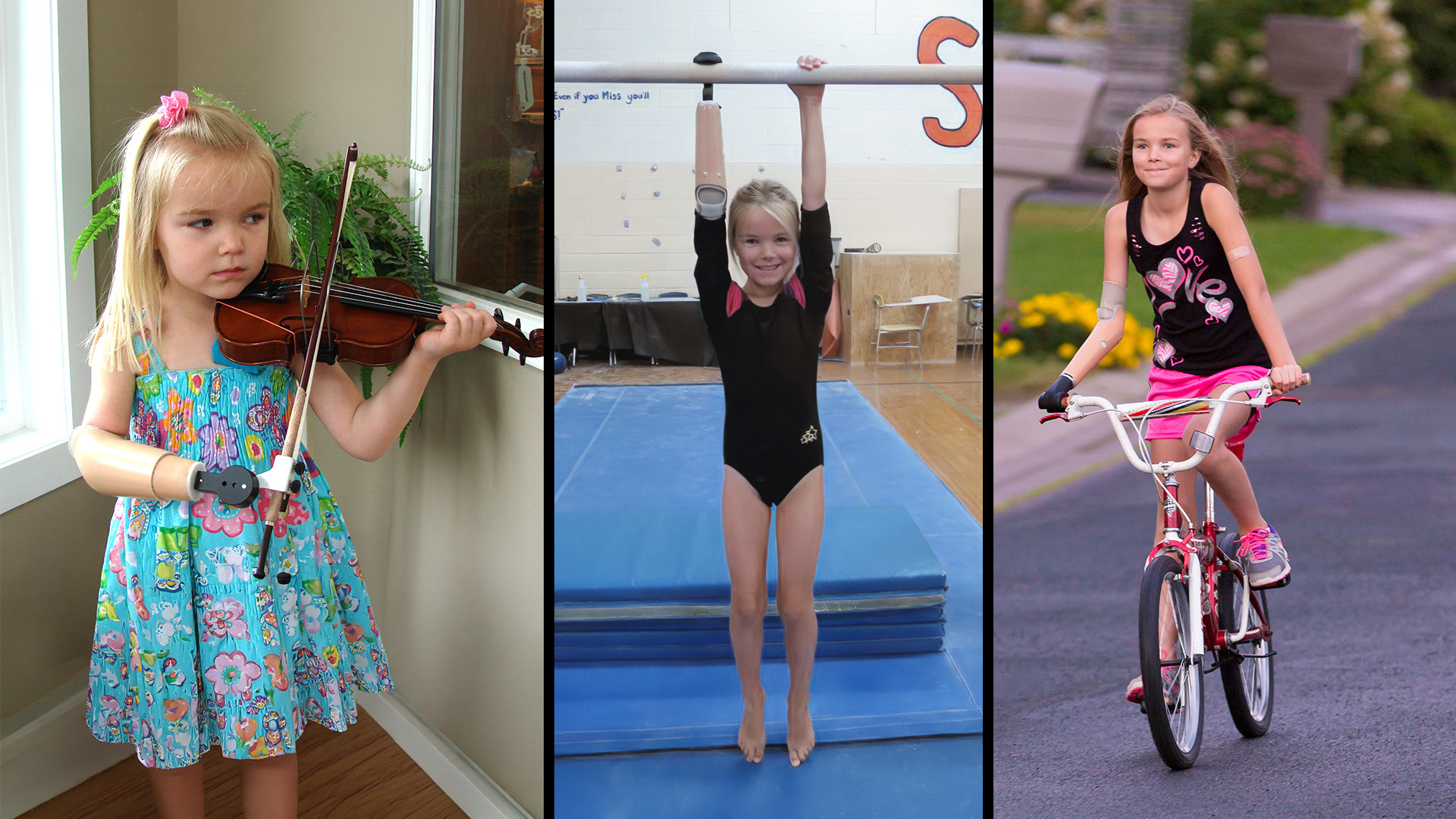
As our patient Amber (pictured at the top of this article), grew up with a congenital limb difference, her prostheses grew with her. When she was young, she wore a single-motor myoelectric hand to school and had a few activity-specific devices for her hobbies, which included playing the violin, riding her bike and doing gymnastics.

Amber Triptych-Big

But Amber is no longer a pediatric patient since she turned 18 and went to college. Now she’s wearing a small bebionic myoelectric hand. Since she began using a prosthesis when she was only 18 months old, she was able to adjust to her new prosthesis very efficiently.

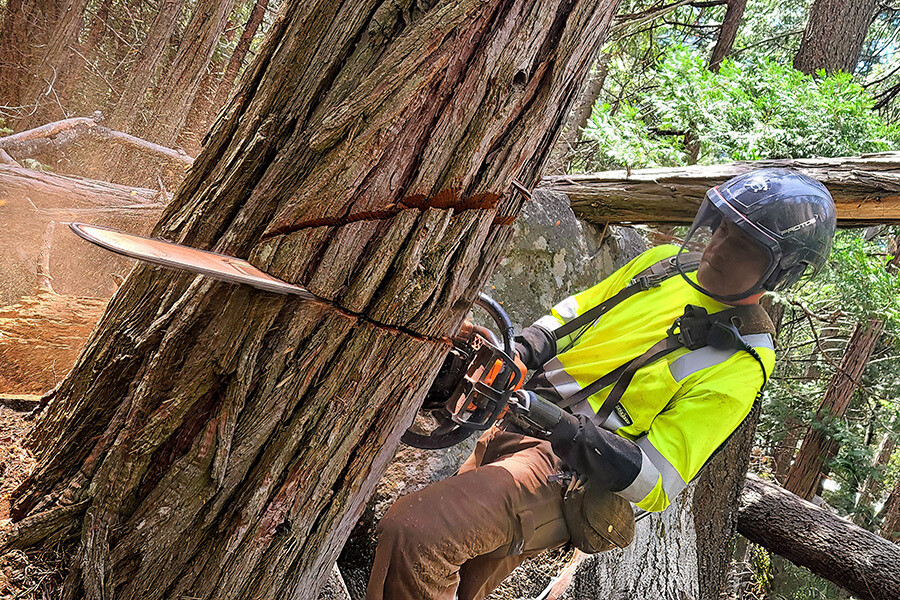
We’re also there for when our patients with big dreams change gears. Our patient Austin was a young man who had just landed his dream job as a tree faller in Yosemite when he was involved in an accident that resulted in his left arm being amputated above the elbow. When Austin asked other prosthetic care providers if he could be fit with a prosthesis that would allow him to return to work, everyone told him no. But we said yes, and he got back to his job:

Austin-Listing

Austin returned to work and his prosthesis functioned just as it should. But Austin decided to change his career. He and his wife had two kids and moved across the country. This transition doesn’t discount the fact that Austin had a work goal that he was able to pursue thanks to a well-designed, well-fitting and well-functioning prosthesis. His prosthesis allowed him to provide for his family and showed him that, with the right prosthetic care and support, anything is possible.

Change is hard. Even when it’s good. We don’t want our patients to limit themselves by thinking “Well, what about my prosthesis?” We want our patients to say to themselves, “I’m going to give my center a call and update them so they can figure out how to support me on this new venture.”

Our prosthetists are upper limb specialists who have years of experience figuring out how to fit their patients with functional, comfortable prostheses. Our occupational therapists are clinical therapy specialists who are there to teach their patients how to use their functional, comfortable device. Our whole team is there to support our patients as they move through this game of life.

If you, or someone you know, would like to learn more about the holistic prosthetic care that our centers offer, please contact us. If you’d like to leave a comment, please do so below.

Subscribe!

No Comments Yet

Let us know what you think